
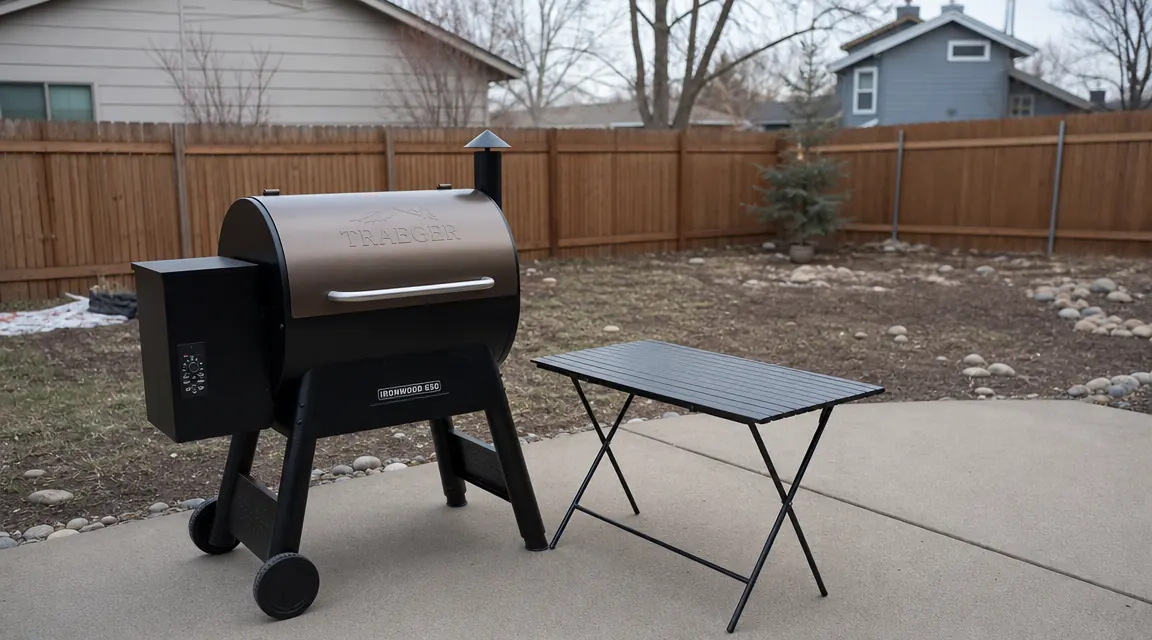
Let me tell you the thing almost nobody putting out a Traeger Pro 34 review will say: the first few cooks are probably going to be a little disappointing. Not bad, not broken, just not the transformative backyard-BBQ moment you were imagining when you handed over a few hundred dollars. I bought the Pro 34 after weeks of research, unboxed it on a Saturday morning with real excitement, and then spent my first three cooks second-guessing whether I had made a mistake. I had not. But I wish someone had set my expectations more honestly before I started, so that is what I am going to do for you here.
This is not a teardown. The Traeger Pro 34 is a genuinely solid pellet grill and I still use it regularly. But reviews that read like they were written by Traeger's marketing team do you a disservice. You deserve to know about the pellet cost math, the cold-start overshoot, the grease management reality, and the ways this grill will change your cooking habits whether you want them to change or not. Read this before you buy. If you still want it after, you will be happy you did the research. If you realize it is not the right fit, you just saved yourself a trip to the UPS store.
The Quick Verdict
The Traeger Pro 34 earns its reputation for temperature control and ease of use, but it comes with a real annual running cost, a learning curve nobody warns you about, and maintenance demands that require more diligence than the manual suggests. Buy it knowing those things upfront and you will love it. Buy it expecting plug-and-play perfection and you will have a frustrating first month.
Amazon Check Today's Price →You have been researching this for weeks. Here is the current price so you can finally decide.
The Traeger Pro 34 holds 884 square inches of cooking space, runs on hardwood pellets for genuine smoke flavor, and manages temperature automatically while you do other things. Check today's price on Amazon and see current availability before you read the rest.
Amazon Check Today's Price on Amazon →How I Have Tested This Grill
I am a backyard cook. I cook for my family on weekends, host a cookout a few times a year, and have burned enough food over the years to have a healthy respect for what can go wrong. I am not competing on the circuit. I just want food that tastes genuinely good without spending my whole Saturday managing a fire. When I bought the Pro 34 with those modest goals, I still found things that caught me off guard. This article is specifically about those things: the first-cook realities, the costs, the maintenance habits, and the surprises the product page skips. For the full picture of long-term temperature data and capacity, my companion long-term review of the Pro 34 covers 18 months of use.
The First-Cook Reality Check Nobody Prepares You For
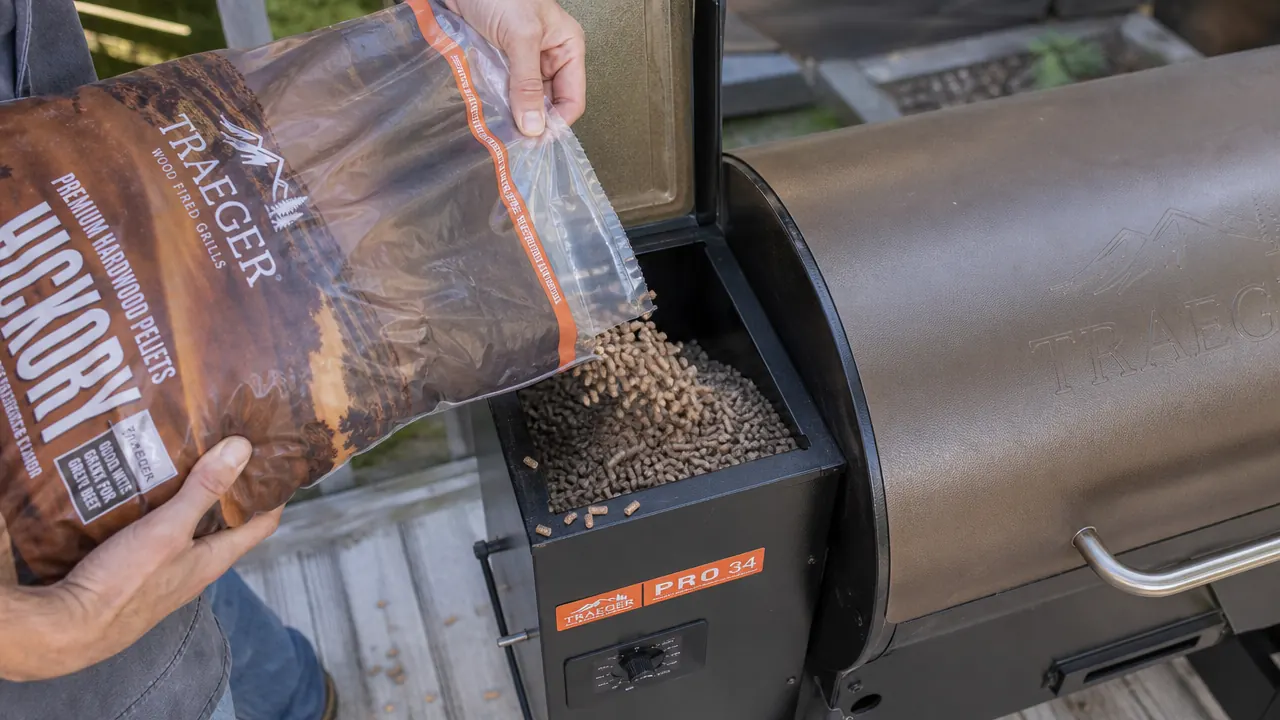
Here is what your first cook on the Traeger Pro 34 is probably going to look like. You will fire it up, smell a burn-off smell stronger than you expected, hear the auger feeding pellets with a quiet motor sound, and watch a startup sequence run for twelve to fifteen minutes before you are actually cooking. On a cold start the grill typically overshoots its setpoint by fifteen to twenty degrees for the first twenty minutes while the D2 controller calibrates to ambient conditions. That is normal. But if you are cooking something temperature-sensitive, like a chicken breast or delicate fish, that overshoot matters and nobody tells you about it in the box.
Then your food comes off and it tastes good, maybe quite good, but probably not the transcendent smoky BBQ you were picturing. Pellet grills produce a mild, clean smoke. On your first cook, before the grill has seasoned and before you have dialed in your wood selection, the smoke is subtle. People who come from gas grilling are often pleasantly surprised. People who come from charcoal or watched a lot of competition BBQ content are sometimes underwhelmed. Both reactions are reasonable responses to the same grill.
The point is not that the Pro 34 underdelivers. It is that the gap between expectation and reality is wider than most reviews admit, and your second and third cooks are usually meaningfully better than your first once you understand how the grill behaves.
Your second and third cooks are going to be noticeably better than your first. The grill is not broken on day one. You are just learning a new tool. Give yourself that grace before you start second-guessing the purchase.
The Pellet Cost Math That Nobody Does for You
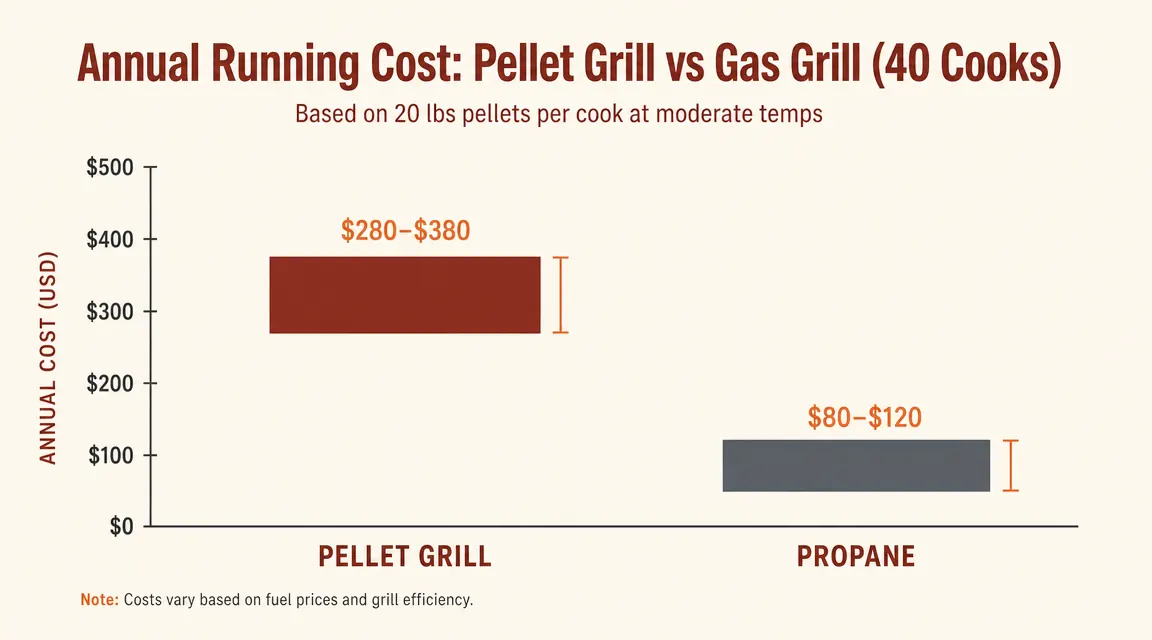
This is the conversation that gets skipped in almost every Traeger review, and it is one of the most practically important things to understand before buying. A standard 20-pound bag of decent hardwood pellets runs at moderate cost depending on brand and where you buy it. In moderate weather, the Pro 34 burns approximately 1 to 3 pounds per hour depending on cooking temperature and conditions. A four-hour cook at 225 degrees might use six to eight pounds. A longer smoke at 250 for eight hours might consume twelve to sixteen pounds.
If you cook on weekends throughout a six-month season and average one substantial cook per week, you are looking at substantial annual pellet costs alone, not counting the grill itself. Compare that to a propane tank refill at modest cost for a 20-pound tank that lasts several long cooks, and the operating cost difference is real. You are paying a premium for the convenience and flavor that pellet grilling provides, and that premium adds up. That is not a reason to avoid the grill. It is a reason to know what you are buying into before you click add to cart.
One more pellet note: Traeger's branded pellets are fine but not obviously better than competing options. Bear Mountain, CookinPellets, and Lumber Jack are well-regarded by experienced backyard cooks. You do not have to stay inside the Traeger ecosystem on pellets. The grill does not know or care what brand you load.
The Grease Management Reality
The Traeger Pro 34 uses a sloped grease management system: fat drips off the grates, falls onto a sloped drip tray, and flows into a foil-lined bucket on the side. It is a clever design and mostly works well. The word 'mostly' is doing real work in that sentence. The drip tray channel can develop hardened grease buildup over time, especially when cooking fatty proteins like pork shoulders, chicken thighs, or brisket. When that channel clogs, grease pools. Pooled grease in a hot environment is exactly what starts a grease fire.
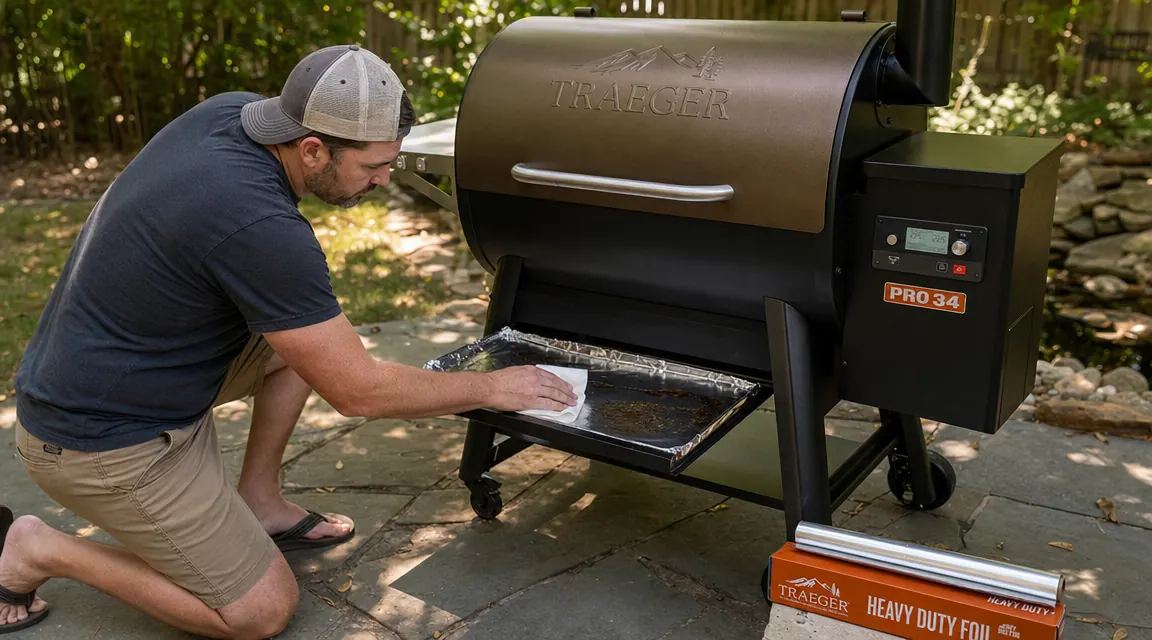
Traeger's manual suggests cleaning the system occasionally. In practice, if you cook fatty proteins, check and clean that drip tray channel every three to four cooks. I line my drip tray with heavy-duty foil and replace it after every two cooks. That takes five minutes, makes cleanup fast, and essentially eliminates the pooling risk. This foil trick is something you learn from backyard cook forums, not from the included documentation. Once you know it, the maintenance feels routine. Before you know it, it is a non-issue. In month one, when you do not know yet, it is genuinely a risk worth understanding upfront.
What Traeger's Marketing Gets Wrong About the App
The WiFIRE app is a selling point Traeger leans on heavily. The pitch: connect your grill to home WiFi, monitor and adjust temperatures from your phone, and never walk outside to check on your cook. The reality is more conditional. If your backyard is within solid range of your router, the app works reasonably well. If your router is on the opposite side of the house, or your backyard is large, or you have concrete block construction, the connection will be unreliable.
When the app loses connection, the grill keeps cooking fine. Nothing bad happens. But you lose the remote monitoring feature you paid for, and that is frustrating when it drops mid-smoke. A WiFi extender pointed toward the backyard typically solves it, but that is an extra expense that should not be necessary on a grill at this price point. The app gives you real value when it works: temperature monitoring, cook time estimates, and probe temperature alerts. Rate it as a nice bonus that requires solid network coverage, not a core feature you can count on out of the box.
What I Liked
- Temperature control is genuinely impressive once past the cold-start overshoot phase, holding steady within reasonable tolerances for long low-and-slow cooks
- Set-and-walk-away convenience is real: load pellets, set temperature, close the lid, and go do other things while food cooks for hours
- 884 square inches of cooking space fits a full packer brisket, two racks of ribs laid flat, or a whole turkey without creative geometry
- Wood flavor from quality hardwood pellets is authentic and noticeably better than gas, even if milder than stick-burner or heavy charcoal smoke
- D2 controller startup and shutdown sequences are designed to prevent flare-ups and creosote buildup when used correctly
- Traeger has a real customer support operation and a large user community, so finding help when something goes wrong is straightforward
Where It Falls Short
- Annual pellet cost for regular weekend use is substantially higher than propane or charcoal operating costs over the same period
- First-cook disappointment is common because marketing expectations run ahead of the grill's actual initial smoke output and learning curve
- Cold-start temperature overshoot of 15 to 20 degrees above setpoint in the first 20 minutes can affect temperature-sensitive proteins
- Grease management requires proactive maintenance every 3 to 4 cooks to prevent pooling and flare-up risk, which the manual does not emphasize clearly
- WiFIRE app connectivity is unreliable without strong backyard WiFi coverage, making remote monitoring conditional on your home network
- Pellets left in the hopper through humid weather or rain can clump and jam the auger feed system, requiring an unplanned mid-season cleanup
The Pellet Storage Problem Nobody Mentions
Wood pellets absorb moisture. If you leave a partial hopper of pellets in your Traeger between cooks during humid summer weather, and especially if rain mist-drifts into the hopper lid seam, those pellets can swell and clump. Clumped pellets do not feed properly through the auger. A jammed auger means your grill drops temperature and potentially shuts down mid-cook without warning. It is fixable: pull out the pellets, clear the auger, dry the hopper, reload with fresh. But it is a headache that is completely preventable once you know about it.
The easy habit: after every cook, empty the hopper to near-empty and store remaining pellets in an airtight container in your garage. The Traeger hopper lid is not weather-sealed well enough for multi-week storage in a humid climate. Backyard cook communities know this immediately. New owners discover it the hard way. Now you know before it happens to you.
Who This Grill Is Right For
If you are a weekend backyard cook who wants longer, slower cooks without babysitting a fire, the Traeger Pro 34 is a genuinely strong choice. It is built for briskets, pork shoulders, whole chickens, and ribs where holding a steady temperature for four to twelve hours makes a real difference. The grill rewards patience and punishes rushing. If that matches your style, the first-month learning curve is worth it and the results after you find your footing are consistently good.
It is also a solid choice if you cook for a family of four to six and want to move beyond burgers without spending years learning fire management. The pellet grill format is the most forgiving entry into smoking meat that exists right now. You will have genuinely good results within your first month. My Traeger Pro 34 vs Pit Boss comparison covers how this grill stacks up against the main lower-cost alternative if you are still deciding between the two.
Who Should Pass on This Grill
If your main mode is high-heat searing and most of your cooks are steaks or burgers where you want a hard sear and fast cook time, the Pro 34 is not optimized for you. It maxes out at 500 degrees, adequate for a reverse sear but not for the intense direct flame contact that creates a serious crust. You are paying for a low-and-slow tool. Using it primarily as a high-temp grill is like buying a quality bread knife to slice steak. It sort of works, but that is not what it was made for.
If budget is a real constraint, the annual pellet cost is worth confronting before you buy. Pit Boss and Z Grills models in the lower price range get you into pellet cooking at lower upfront cost. If you cook a few times a month and just want something that basically works, the Traeger premium on temperature precision and long-term build quality may not justify the price gap for your use case.
And if you love managing a fire, adjusting vents, and chasing the smoke, this grill will take all of that away from you deliberately. Pellet grills automate what fire-lovers enjoy doing by hand. If the craft of fire management is the point for you, the Pro 34 solves a problem you do not actually have.
You have read the honest version. Now check today's price and make your call.
The Traeger Pro 34 is a real grill for real backyard cooks who want consistent results without fire management. Go in knowing the pellet costs, the first-cook learning curve, and the grease maintenance routine, and you will not be surprised. Check today's price on Amazon and read the current buyer reviews.
Amazon Check Today's Price on Amazon →