
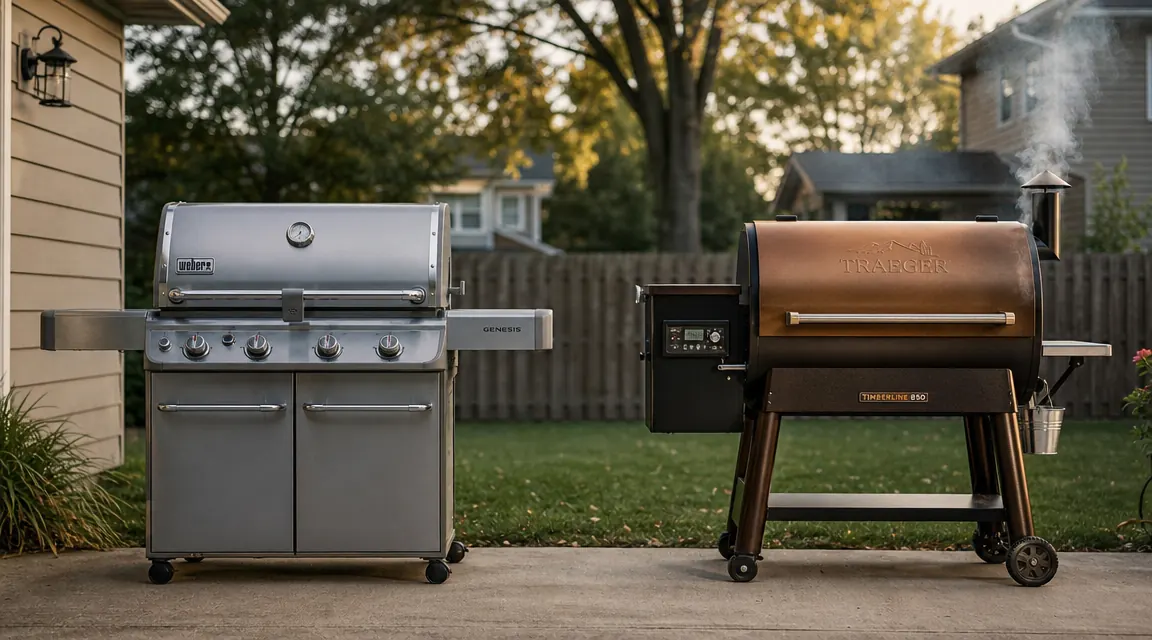
I cooked on a gas grill for six summers. Convenient, sure. But every time I wanted real BBQ flavor, I was chasing it with liquid smoke or a tinfoil packet of wood chips that barely did anything. The food was fine. It was never the food I actually wanted. That changed when I switched to a pellet grill, and I wish someone had laid out the reasons before I waited as long as I did.
If you're wondering whether a pellet grill is worth the upgrade, here are the 10 reasons that convinced me. Every one of them is anchored to the Traeger Pro 34, which is the pellet grill I cook on and the one I'd point a first-timer toward without hesitation.
Tired of food that tastes like gas instead of wood smoke?
The Traeger Pro 34 gives you 884 square inches of cooking space, set-it-and-forget-it temperature control, and real hardwood smoke flavor on everything from ribs to salmon. It's the pellet grill most backyard cooks wish they'd bought sooner.
Amazon Check Today's Price on Amazon →You Get Real Wood Smoke Flavor Without Any Extra Work
A gas grill burns propane. That's it. No matter what you throw on the grate, the underlying flavor is propane combustion and whatever fat drips onto the burner. A pellet grill burns compressed hardwood pellets, which means every cook is infused with actual smoke: hickory, applewood, cherry, mesquite. The Traeger Pro 34 produces consistent thin blue smoke at every temperature, and you notice it the first time you pull a chicken breast off the grate. It tastes like something.
Temperature Control Is Precise and Stays There
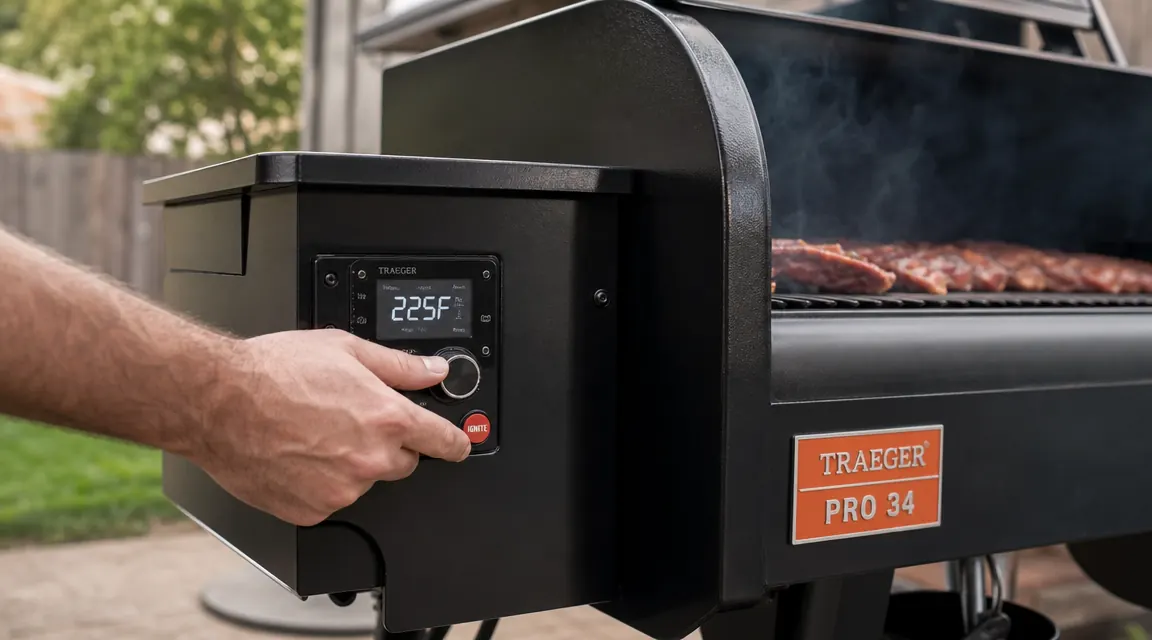
Gas grills have knobs. They give you a rough range, not a temperature. If you want to smoke ribs at 225 for five hours, you're babysitting a gas grill the entire time, adjusting burners, moving meat around hot spots. The Traeger Pro 34 has a digital controller that locks in your target temperature, then feeds pellets automatically to hold it within a few degrees. Set 225, walk away, come back to ribs that have been cooking at exactly 225 the whole time.
It Works as a Smoker and a Grill in One Unit
Most people buy a gas grill and a separate smoker and then run out of patio space. A pellet grill does both. The Traeger Pro 34 can smoke at 165 degrees for jerky, cruise at 225 for low-and-slow brisket, roast a whole chicken at 375, and crank to its high setting for burgers and steaks with good grill marks. That's four different cooks on one piece of equipment. It replaces two or three separate things you might otherwise buy.
The Learning Curve Is Almost Flat
Every beginner I've met is intimidated by smoking meat because they assume it requires years of experience and constant attention. A pellet grill flattens that curve. You fill the hopper, set the temperature, put the meat on, and check it occasionally. The Traeger Pro 34 handles the fire management automatically. You're not managing airflow, not adjusting vents, not worrying about the fire going out. It genuinely is the easiest way to produce good BBQ.
You Can Actually Leave It Alone During Long Cooks
A 12-hour brisket on a gas grill means 12 hours of fiddling. A pellet grill's automatic auger feeds pellets from the hopper into the firepot at the rate needed to hold temperature. The Traeger Pro 34 has an 18-pound hopper capacity, which covers most all-day cooks without a refill. You check in, you monitor the internal temp of the meat, but you're not chained to the grill. That's the difference between cooking being a job and cooking being something you enjoy.
The first time I smoked a pork shoulder on the Traeger, my neighbor asked if I'd had a caterer. I had not. I had just set a temperature and waited.
You Can Choose Your Smoke Profile by Swapping Pellets
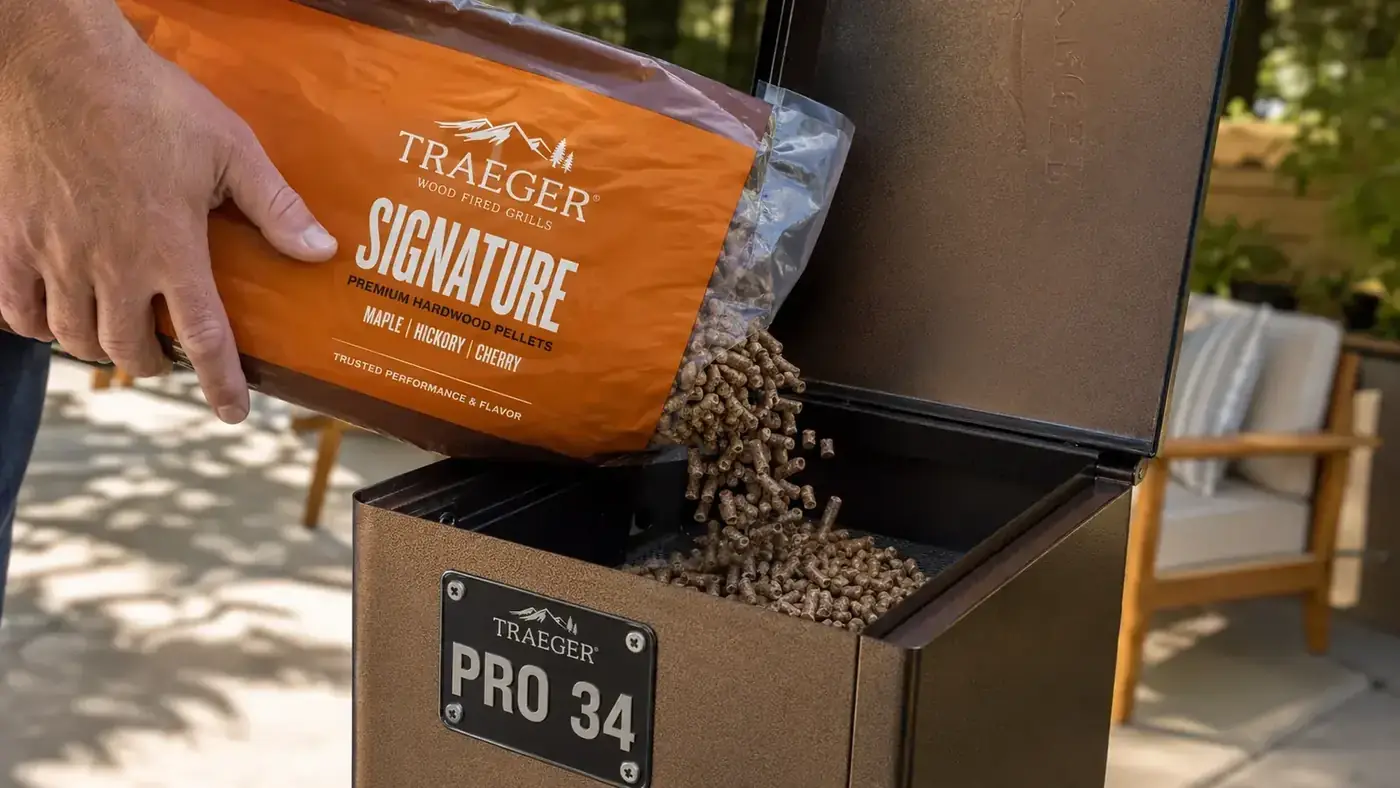
Every wood variety creates a different flavor. Hickory is bold and earthy, great for ribs and pork. Applewood is mild and slightly sweet, perfect for chicken and fish. Cherry adds a reddish color and gentle fruitiness to beef. On a gas grill, you have no control over this. On the Traeger Pro 34, you just empty the hopper, pour in the pellets you want, and the next cook takes on that character. It's a level of flavor control a gas grill simply cannot offer.
The Cooking Area Is Genuinely Spacious
The Traeger Pro 34 has 884 square inches of total cooking area across two grates. That is enough to smoke two full packer briskets side by side, or a dozen racks of ribs, or a turkey plus a couple of chickens. Compared to most gas grills in the same price range, which have 500 to 600 square inches and no second shelf, the Pro 34 is a serious step up in capacity. Feeding a crew on a weekend is not a logistical problem anymore.

Cleanup Is Simpler Than You'd Expect
Gas grills look easy to clean and then you realize the grease trap is a nightmare and the burner tubes clog without warning. Pellet grills produce ash from the hardwood pellets, which collects at the bottom of the firepot and gets vacuumed out every few cooks. The drip tray on the Traeger Pro 34 is lined with foil (you change the foil, not the tray), and grease channels into a bucket on the side. It is not spotless, but the maintenance is predictable and takes under ten minutes.
It Makes You a Better Cook by Default
When your grill holds a precise temperature for hours, you stop guessing and start learning. You notice that chicken thighs at 325 take about 45 minutes and come out juicy. You notice that pork shoulder hits a stall at 165 degrees and needs another few hours to push through. The consistency of the Traeger Pro 34 gives you repeatable results, and repeatable results teach you what actually matters. That feedback loop just does not exist on a gas grill where every cook is a slightly different variable.
People Notice the Difference Immediately
This sounds simple but it matters. When you cook on a gas grill, guests eat the food and say it's good. When you cook on a pellet grill, guests ask what you did differently. The smoke ring on a brisket, the mahogany bark on ribs, the slight smoky sweetness on a whole chicken: these are visible and tasted. Nobody mistakes pellet-smoked food for gas-grilled food. The Traeger Pro 34 is the thing that makes backyard cooking feel like something worth showing off.
What I Would Skip
A pellet grill is not a charcoal grill. If you want the high-temperature sear that comes from cooking directly over live coals, a pellet grill at its maximum setting gets close but does not replicate it. For most backyard cooking, that tradeoff is worth it by a wide margin. But if searing is your primary goal, a cast-iron skillet or a charcoal grill alongside the pellet grill covers that gap. The Traeger Pro 34 is not meant to replace everything. It is meant to be the workhorse that handles 90 percent of what you actually cook.
If you want to read more about the Traeger Pro 34 before buying, I have a full long-term review after 18 months of use and an honest review covering what Traeger does not advertise. Both are worth reading before you pull the trigger.
Ready to cook food that actually tastes like BBQ?
The Traeger Pro 34 is rated 4.5 stars across more than 2,300 reviews. It is the pellet grill I point every first-time buyer toward, and the one I would buy again without hesitation. Check today's price on Amazon and see if it fits your setup.
Amazon Check Today's Price on Amazon →