
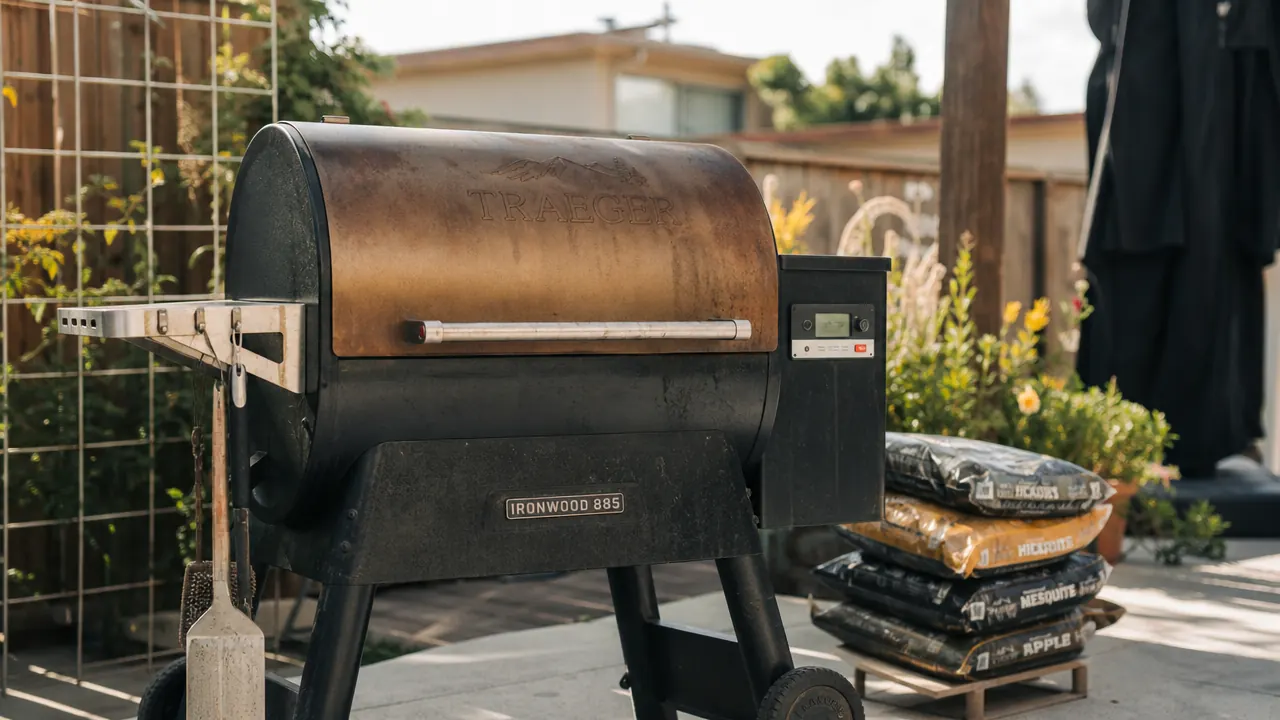
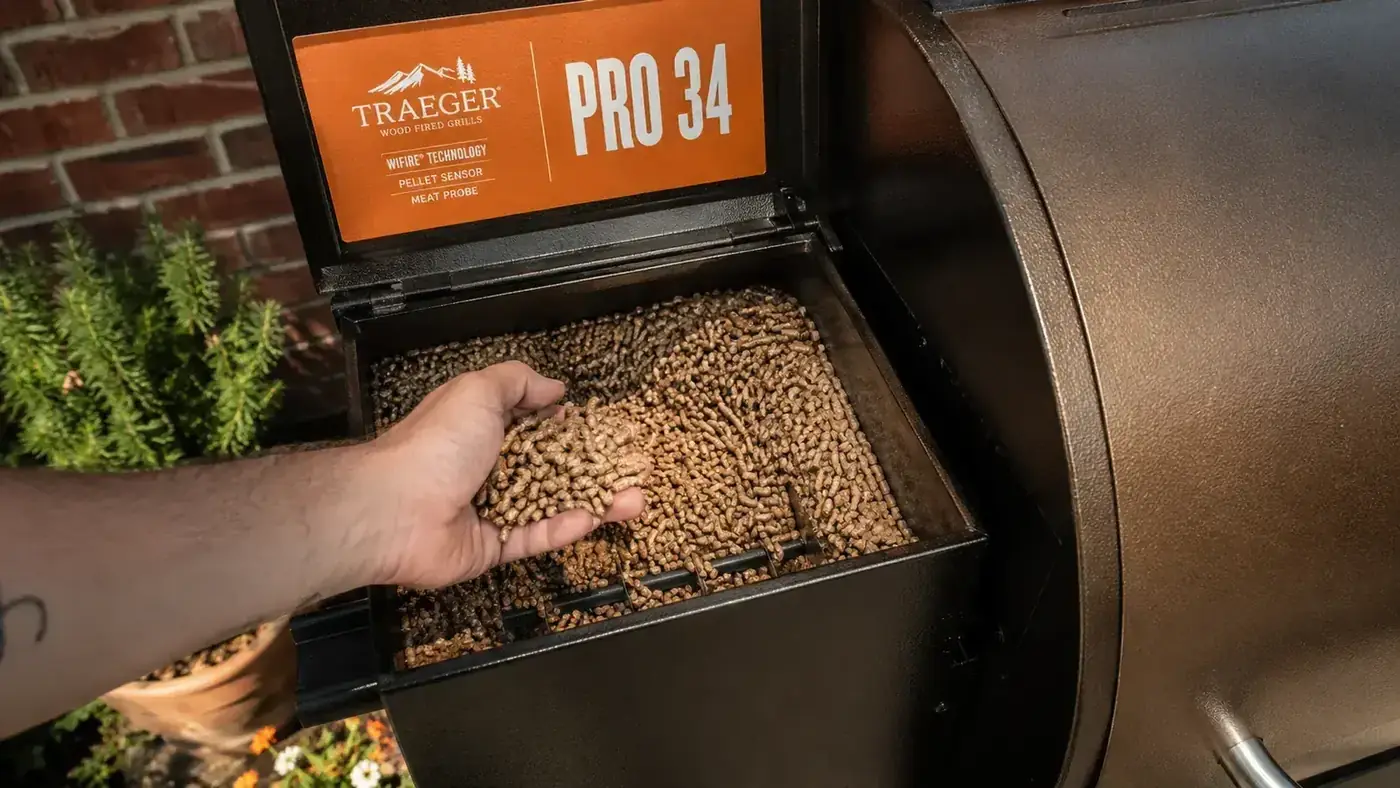
About eighteen months ago I rolled the Traeger Pro 34 off the pallet, assembled it in the driveway with my eleven-year-old son watching over my shoulder, and proceeded to absolutely ruin a rack of St. Louis ribs on the very first cook. Not the grill's fault. Mine. I had spent years babysitting a gas grill, poking at burners, chasing hot spots with a spatula, and I came into pellet grilling with all the same twitchy habits. The Pro 34 wanted me to set a temperature, close the lid, and trust it. That took a week or two to actually believe.
Now it is eighteen months later. That grill has been through two full grilling seasons, a late-October brisket marathon, probably forty whole chickens, a very ambitious holiday prime rib, and more weekend smokes than I've kept count of. The bronze finish is a little weathered, the grill grates have seen real use, and I've got opinions. Real ones, not the kind that come from a single unboxing afternoon. Here is what I actually know about the Traeger Pro 34 after living with it.
The Quick Verdict
The Traeger Pro 34 is a genuinely reliable pellet grill that removes most of the frustration from low-and-slow cooking. Temperature consistency is real, the cooking area handles a serious amount of food, and the learning curve is forgiving. It is not perfect: pellet consumption runs higher than advertised in cold weather, the grease management system requires attention, and the WiFIRE app is only as useful as your backyard WiFi. For a weekend backyard cook who wants great results without babysitting the fire, this grill delivers.
Amazon Check Today's Price →You have been comparing this grill for weeks. Here is your sign.
The Traeger Pro 34 holds 884 square inches of cooking space, runs on wood pellets for genuine smoke flavor, and keeps temperature automatically so you can actually enjoy the cookout. Check today's price on Amazon and see current availability.
Amazon Check Today's Price on Amazon →How I Have Used It Over 18 Months
I am not a competition pitmaster. I am a teacher and a dad who grills most weekends from April through November and occasionally drags the grill out in the colder months when someone really wants smoked turkey for Thanksgiving. My backyard in central Tennessee gets hot in summer and wet in fall, so the grill has dealt with real seasonal variation. I cook for four to six people most of the time, occasionally for a bigger group when family is in town.
In the first six months I was still figuring out the rhythms: how long it takes to come up to temp, how much pellet burn varies with ambient temperature, when to use the smoke setting versus a straight 225. By month eight I had a real feel for it. By month twelve I was not even thinking about it the same way I used to think about managing a charcoal fire. I was just cooking.
I used a Thermoworks Smoke dual-probe thermometer to cross-reference the grill's onboard display throughout the first year. That gave me a realistic picture of how the Pro 34 actually holds temperature versus what the controller reads. I will share those findings below.
Temperature Consistency: The Real Story
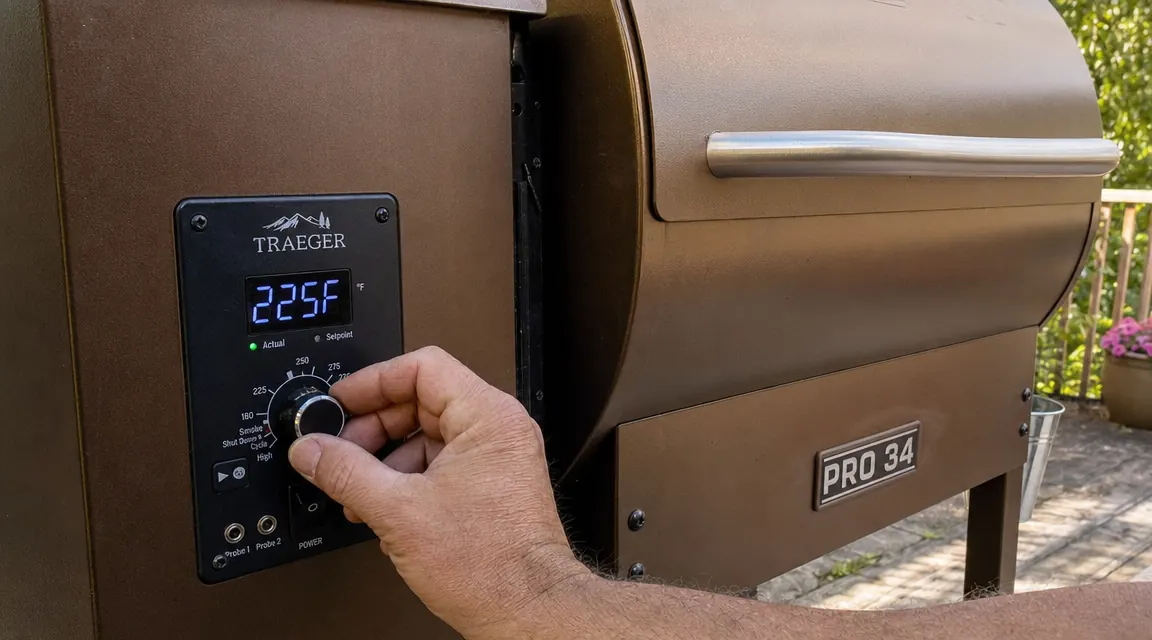
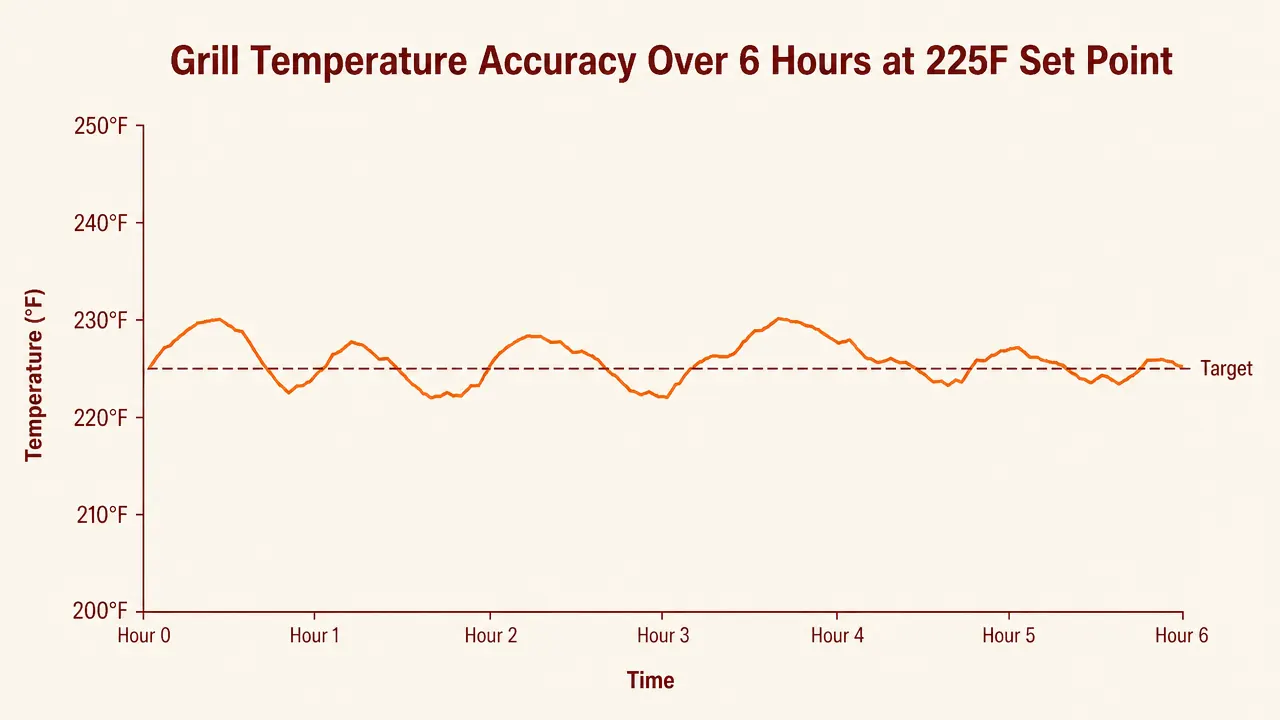
This is the thing everyone asks about, and it is also where Traeger earns most of its reputation. The D2 controller on the Pro 34 is not magic, but it is genuinely good. Over a six-hour smoke session at 225 degrees Fahrenheit, my external probe readings showed the actual grate temperature ranging from about 218 to 233 degrees at the center of the grill. That is a swing of plus or minus eight degrees from setpoint, which is solid for a grill at this price range. Your charcoal fire will not do that. Your gas grill will not do that.
What I also noticed is that there is a meaningful temperature difference between the left and right sides of the grill, especially at higher temperatures. At 375 degrees for roasting chicken, the right side near the firepot runs noticeably hotter than the left side near the hopper. I learned to rotate things and to use the upper shelf for anything that needs a gentler, more even environment. That is not a dealbreaker. It is just something worth knowing going in, because nobody tells you this and then you end up with one side of your chicken thighs more done than the other and you think something is wrong with the grill.
Cold weather changes the equation. When I ran a brisket overnight in October with an ambient temperature of 44 degrees Fahrenheit, pellet consumption went up noticeably and the grill worked harder to hold temp. It did hold temp, but the efficiency story is different in the cold. Budget for that if you live somewhere with real winters.
By month twelve I was not even thinking about managing heat. I was just cooking. That is the real promise of a pellet grill, and this one keeps it.
Cooking Area and Capacity: Who It Is Actually For
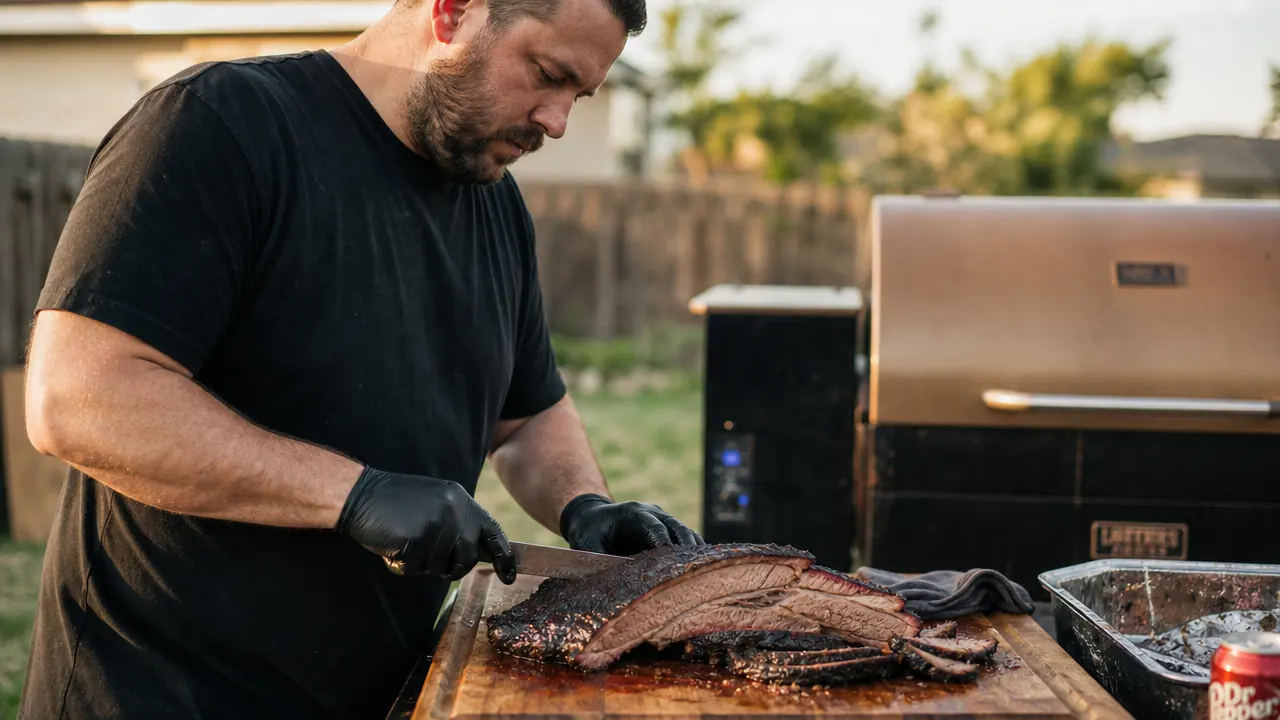
Eight hundred and eighty-four square inches sounds like a lot. In practice it means you can fit two full racks of ribs laid flat with room to spare, or a 16-pound brisket without having to fold it, or four bone-in pork shoulders if you are cooking for a neighborhood event. The upper rack is useful for sausages, vegetables, or keeping things warm while the main grate handles larger cuts. For a family of four to six, this is plenty of space. If you regularly cook for twelve or more people, you will find yourself doing things in batches, but the Pro 34 is not positioned as a commercial smoker.
The porcelain-coated grates hold up well. After eighteen months of weekly use they have not warped, the coating is intact in most places, and cleanup is manageable if you brush them while they are still warm. I do a deeper clean every four to six cooks: vacuum out the firepot, empty the drip tray, check that the grease drain is clear. That last one matters more than Traeger suggests in the manual. A clogged grease drain caused a flare-up on cook number twenty-three that left a scorch mark on the inside lid. My fault for skipping the cleaning check, but worth naming.
Smoke Flavor: Where Pellet Grills Live and Where They Fall Short
Let me be straight with you here, because this is where a lot of people get disappointed with pellet grills if they come from charcoal or offset smoking. The Traeger Pro 34 produces a mild, clean smoke flavor. It is genuine smoke, made from real hardwood pellets, and it absolutely imparts flavor to meat over a long cook. But it is not the aggressive, heavy smoke bark you get from an offset smoker that has been running white oak splits for twelve hours. If your frame of reference is backyard gas grilling, this will taste dramatically smokier. If your frame of reference is a stick burner or a serious charcoal setup, it will taste subtler.
The Super Smoke mode on the D2 controller helps. Running at 165 or 180 degrees in Super Smoke for the first two hours of a brisket or pork butt does build a better bark than jumping straight to 225. I do this consistently now and the results are noticeably better than my early cooks. Wood choice also matters: hickory gives more assertive flavor than apple or cherry, and I have settled on a hickory-and-cherry blend for most of my beef cooks.
If heavy smoke is the one thing you care about most, a pellet grill might not fully satisfy you, and I would rather tell you that now than have you feel misled. If you want great, approachable backyard BBQ with real smoke flavor and zero babysitting, this grill will absolutely deliver.
The WiFIRE App: Useful, Not Essential
The Pro 34 connects to Traeger's WiFIRE app via your home WiFi, which lets you monitor and adjust temperature from your phone. On paper this sounds great. In practice it is fine but not transformative. When it works, being able to glance at my phone and see that the grill is holding at 228 degrees while I am inside helping with homework is genuinely convenient. The problem is that the connection drops more than it should, especially if your backyard is on the edge of your router's range. My garage sits between my kitchen and my grill and I lose the app connection maybe once every three or four cooks. The grill keeps cooking fine. The app just stops updating.
I bought a cheap WiFi extender for the back porch, which mostly solved it. But that is an extra step nobody should have to take with a grill at this price point. Consider it a nice feature that works when your WiFi cooperates, not a core selling point.
What I Liked
- Temperature consistency is genuinely impressive for the price, holding within plus or minus ten degrees in normal conditions
- 884 square inches of cooking area handles a full packer brisket, two full racks of ribs, or four pork shoulders without crowding
- Set-it-and-forget-it pellet feed system is exactly as low-maintenance as advertised on moderate-weather cooks
- D2 controller Super Smoke mode builds noticeably better bark on long cooks at low temperatures
- Porcelain-coated grates have held up after eighteen months of weekly use with no warping
- Startup and shutdown process is simple, reliable, and safe compared to charcoal or wood fire management
Where It Falls Short
- Pellet consumption increases significantly in cold weather, adding cost and refilling frequency
- Left-to-right temperature variation at higher heat settings requires rotating food for even results
- WiFIRE app connection drops regularly in backyards with average WiFi coverage, requiring a separate extender
- Grease management needs more frequent attention than the manual implies, or flare-ups become a real risk
- Smoke flavor is mild and clean, not the heavy bark output you get from an offset or serious charcoal setup
- At current pricing, the cost of pellets adds up over a full season compared to propane or charcoal
Alternatives I Considered Along the Way
The Pit Boss 1150 was the main alternative I went back and forth on before landing on the Pro 34. The Pit Boss has more cooking area at a lower price and includes a direct-flame sear option that the Traeger does not offer. If getting a true sear on steaks matters to you, that is worth thinking about. What I kept coming back to was the D2 controller's temperature stability and the Traeger brand's customer support reputation. I have seen enough stories about Pit Boss temperature swings to decide the premium was worth it for my use case.
I also looked at the Weber SmokeFire before buying, but the early generation had significant reported issues with grease fires and temperature inconsistency that put me off. Weber has improved those grills since, but at the time the Pro 34 felt like the safer, more proven choice. Eighteen months later that still feels like the right call for my situation.
Who This Grill Is For
The Traeger Pro 34 is built for the backyard cook who wants their weekends back. If you have been spending Saturday afternoon babysitting a charcoal fire, fighting inconsistent heat, and ending up with one end of your rack of ribs overdone while the other end needs more time, this grill solves that problem directly. It is also a strong choice if you are cooking for a family of four to eight regularly and need enough room to do a full meal in one session. The forgiving learning curve makes it genuinely approachable for someone who has never smoked anything. You will have good results in the first month if you follow basic guidance, which was not my experience with charcoal when I started.
It is also a solid fit if you want to expand beyond burgers and chicken into longer cooks: brisket, pork shoulder, whole turkey, lamb shoulder. The consistent low-temperature holding is where this grill really earns its keep. I would never have attempted a 14-hour overnight brisket on a charcoal kettle, but I have done it twice on this grill without incident.
Who Should Skip It
If your primary cooking style is high-heat searing and you mostly care about steaks and burgers, this is not the right tool. The Pro 34 tops out at 500 degrees and while that is enough for a decent reverse sear, it will not give you the kind of crust a cast iron skillet or a dedicated high-temp gas grill produces. You are paying for low-and-slow capability, and if that is not your focus, you are paying for something you will not use.
Serious offset or stick-burner enthusiasts who love managing a fire and chasing smoke rings will likely find the pellet grill experience too passive. There is a real craft to fire management that a pellet grill replaces with automation, and some cooks genuinely miss that. If part of your enjoyment comes from tending a fire, this grill takes that away on purpose.
And if your budget is tight, there are capable pellet grills in the lower price range from Pit Boss and Z Grills that will get you into pellet cooking without the Traeger premium. You will trade some temperature precision and long-term build quality, but they work.
Eighteen months of evidence points one direction. Here is where to buy.
If the long-term use picture here lines up with how you cook, the Traeger Pro 34 is a purchase you will not regret. Check today's price on Amazon, read the current reviews, and see whether availability makes sense for your timing.
Amazon Check Today's Price on Amazon →