
You have a perfectly good gas grill sitting in your backyard, but every time you lift that lid, the food tastes like gas grill food. No smoke ring. No depth. No that-took-all-afternoon complexity. Just hot meat that could have come off any grill on the block. If you have ever stood in the hardware store staring at smoker boxes and thought there has to be a way to get real BBQ flavor without buying a whole separate cooker, you are right. There is. And it fits in the palm of your hand.
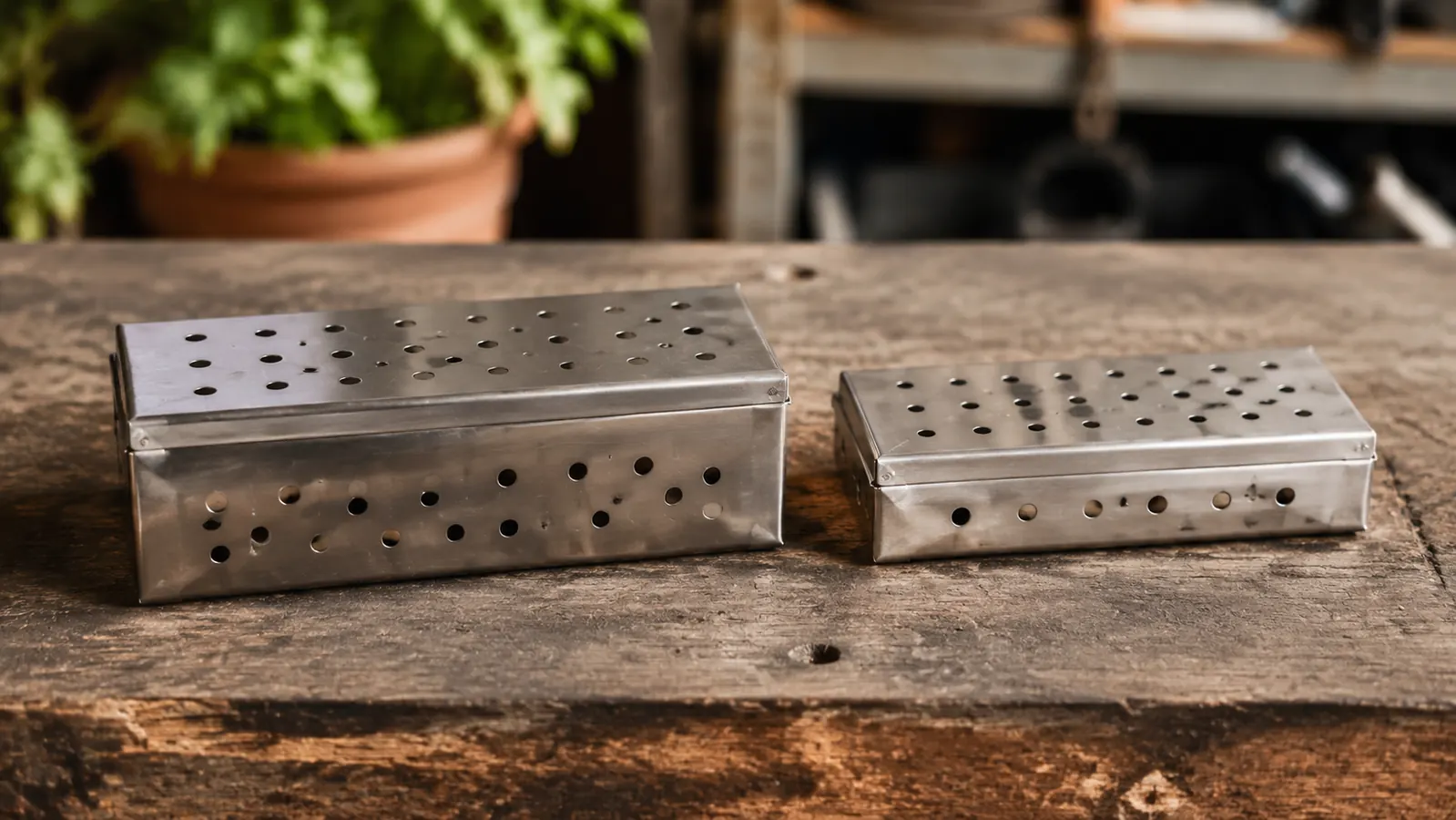
Two boxes show up at the top of almost every search for gas grill smokers: the Weber Premium Universal Stainless Steel Smoker Box and the Char-Broil Cast Iron Smoker Box. They both promise to turn your gas grill into a smoke machine. They are not the same thing, and the differences between them show up in real, noticeable ways during an actual cook. I put both through a full season of weekend cooks on a 4-burner gas grill, including long rib cooks, whole chickens, pork loin, and shorter salmon and burger sessions, to find out which one earns a permanent spot on your grate.
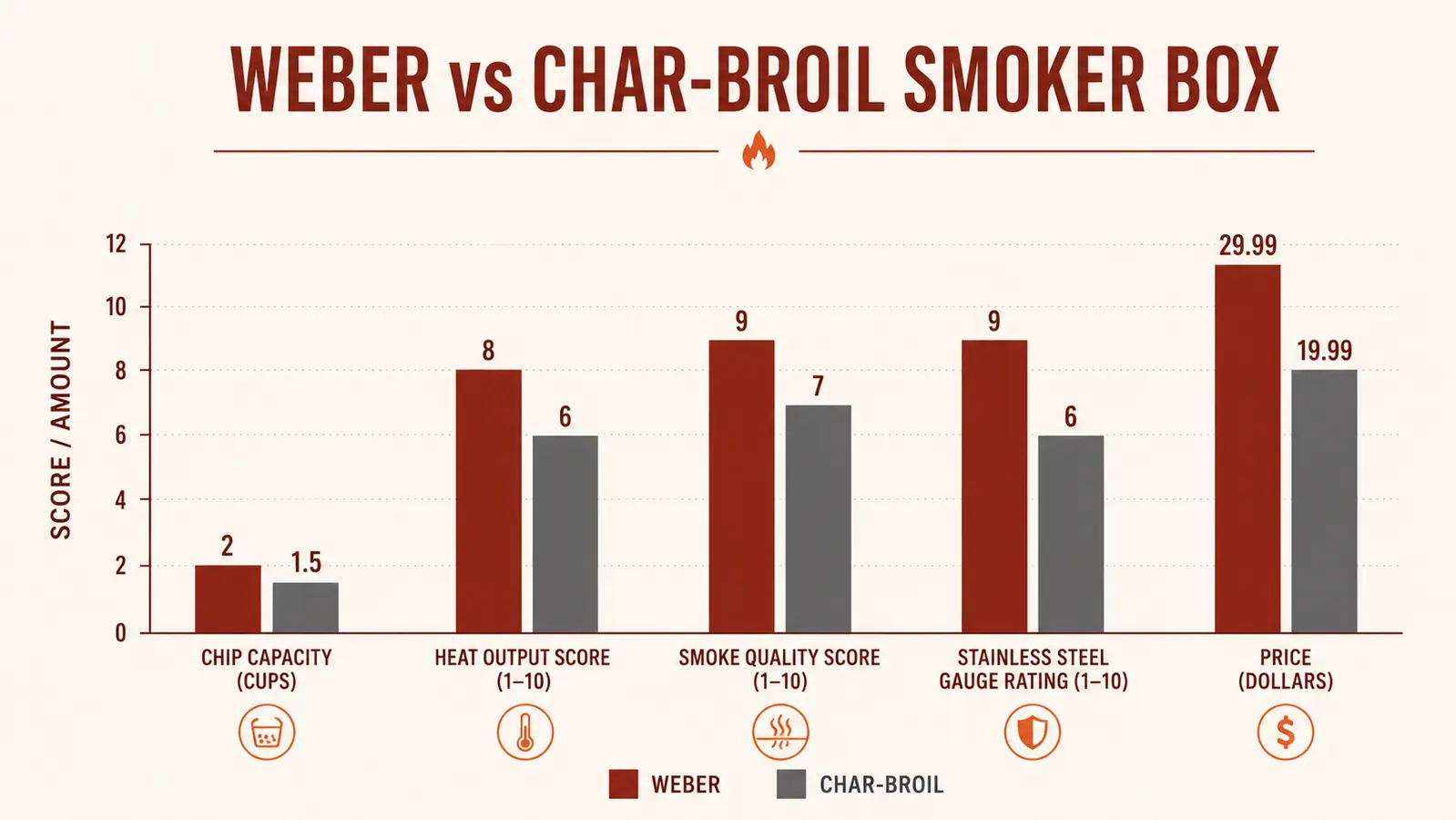
| Weber Premium Smoker Box | Char-Broil Smoker Box | |
|---|---|---|
| Material | Brushed stainless steel | Cast iron |
| Chip Capacity | ~1 cup wood chips | ~0.6 cup wood chips |
| Average Smoke Duration | 45-60 minutes | 25-35 minutes |
| Lid Design | Hinged vented lid, stays open for loading | Flat removable lid, two-piece design |
| Grill Compatibility | Universal fit, works on any gas or charcoal grill | Designed for Char-Broil grills, fits others with adjustment |
| Ease of Cleaning | Dishwasher safe, ash rinses out easily | Hand wash required, cast iron needs periodic re-seasoning |
| Heat Retention | Good, reaches smoke temp within 10 minutes on medium heat | Excellent, cast iron holds heat longer once fully hot |
| Amazon Rating | 4.6 stars (3,829 reviews) | 4.3 stars (significantly fewer reviews) |
| Price Range | Costs more | More affordable |
The short answer: Weber wins on smoke output, durability, convenience, and universal fit. Char-Broil wins on upfront price and raw heat retention once it gets going. If you just want the bottom line, the Weber is the one worth putting on your grill. The rest of this comparison explains exactly why, and flags the one situation where Char-Broil might actually be the smarter choice.
Your gas grill can taste like real BBQ. Here is the box that actually makes it happen.
The Weber Premium Smoker Box works on any gas grill, holds more chips than the competition, and is built to last through seasons of weekend cooks without rusting or warping. Check today's price on Amazon.
Amazon Check Today's Price on Amazon →Where Weber Wins
Smoke output and duration are where the Weber separates itself most clearly from the competition. The larger chip capacity means you can load it once before a cook and get genuine, visible smoke for 45 to 60 minutes without lifting the lid, babysitting the box, or interrupting the cook to reload. That matters more than it sounds. On a rack of spare ribs, that first hour of smoke exposure is essentially everything. Ribs need smoke contact early, before the outer bark sets and the meat becomes less permeable. Running out of active smoke at the 30-minute mark because the box ran dry is exactly the kind of frustration a smoker box is supposed to eliminate, not create.
I tested this on three different cook types where the smoke duration gap showed up clearly. On baby back ribs cooked at 275 degrees for about 3.5 hours, I loaded the Weber once at the start and got steady smoke for roughly 55 minutes before it tapered off. That was enough. The ribs had a real smoke ring and a bark that tasted like something a dedicated smoker would produce. When I ran the same cook with the Char-Broil box, I had to reload chips at the 28-minute mark, which meant opening the grill, losing heat, and fiddling with a hot, two-piece lid while juggling tongs. Not a disaster, but not how you want to spend a relaxed Saturday afternoon. On a whole chicken cook running 90 minutes at 325 degrees, the Weber lasted most of the session. The Char-Broil needed two reloads.
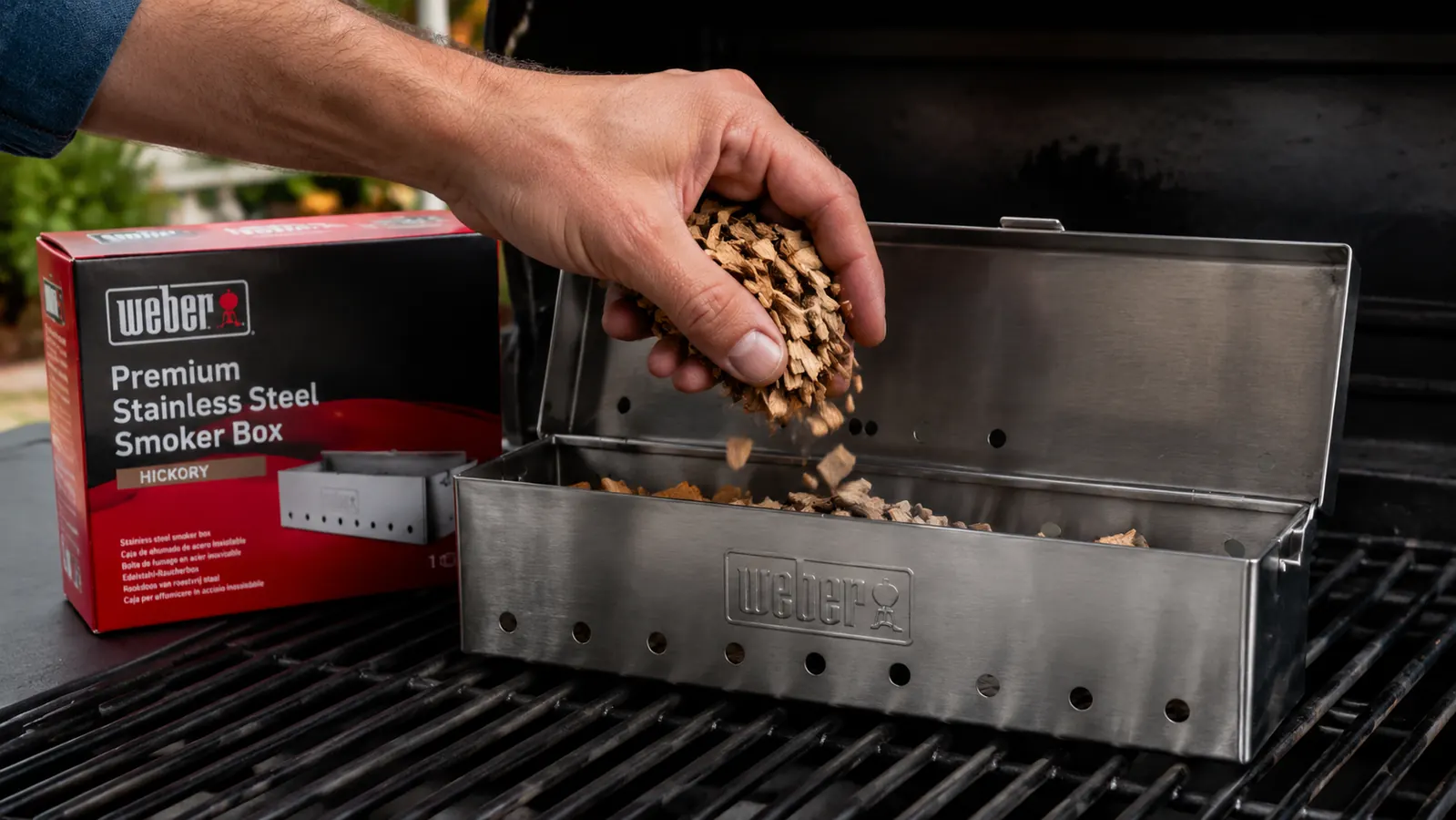
The hinged lid design sounds like a minor ergonomic detail until you are standing at a hot grill trying to reload wood chips with everything else happening around you. The Weber lid swings open on its hinge, stays connected to the box, and props itself at an angle that lets you pour chips in with one hand. The Char-Broil two-piece lid requires removing the flat top completely, setting it somewhere safe on a hot grill surface, pouring chips, and then replacing the lid without dropping it. You need both hands clear, and the lid itself gets dangerously hot. Every time I reloaded the Char-Broil during a cook, it felt like a small interruption that broke the rhythm of the session. The Weber keeps you in the flow.
Durability deserves its own discussion because it is where the real long-term value difference shows up. I put both boxes through a full summer season of regular weekend use: high heat, rain exposure between sessions, occasional hosing down. The Weber came out looking well-used but completely solid. No warping, no rust, no degraded venting. The Char-Broil cast iron box required re-seasoning after the first few cooks to prevent rust from forming on the interior edges and the bottom. If you own a cast iron skillet, you know the drill, and you either love it or you find it one more thing to manage. For a smoker box that lives outside, gets rained on, goes through extreme heat-and-cool cycles, and is not something most people think to carefully dry and re-oil after every cookout, stainless steel is simply more forgiving. The Weber does not ask anything of you between cooks.
Universal fit is the last big Weber advantage and it is genuinely meaningful if you do not own a Char-Broil brand grill. I tested the Weber on a 3-burner Weber Spirit, a 4-burner Char-Broil gas grill, and a compact 2-burner camp-style grill. It sat flat on the grate and stayed put without any adjustment on all three. The Char-Broil box is sized and shaped with Char-Broil grill geometry in mind. It worked on the others, but it shifted around on narrower grate bars and needed a few minutes of placement adjustment to feel stable. If you have a Char-Broil grill, that difference probably does not matter. If you have anything else in your backyard, Weber is the safer bet.
Where Char-Broil Wins
The Char-Broil box has two genuine advantages and I want to be straight about them because this is not a one-sided story. First, the upfront price is meaningfully lower, typically running less than the Weber depending on where you shop. If you are not sure whether a smoker box is something you will actually use regularly, or you just want to try the concept on a single cookout before committing to a higher-quality tool, that price gap makes a real difference. There is no shame in starting with the cheaper option to see whether smoker box cooking fits your style.
Second, cast iron's thermal mass is a real and measurable advantage once the Char-Broil box is fully up to temperature. Cast iron holds heat more steadily than stainless steel and does not fluctuate as much when the burner cycles or when a brief wind hits the grill. For certain low-and-slow applications on a grill that runs on the cooler side, that steady retained heat can produce a more consistent smoke output per chip rather than the burst-and-fade pattern you sometimes get from thinner materials. That is a legitimate technical edge. The tradeoff is the preheat time: the Char-Broil takes noticeably longer to reach smoke temperature at the start of a cook, which means you lose some early smoke exposure on proteins that benefit from smoke contact from the very first minute they hit the grill. Chicken thighs and pork loin showed the most difference. Burgers and steaks where the cook is under 20 minutes showed almost none.
About thirty minutes in, my neighbors started showing up uninvited at the back fence. That is what a properly loaded Weber smoker box does on an otherwise ordinary gas grill. It fills the backyard with smoke that smells like an actual barbecue.
The Smoke Output Test: Ribs, Chicken, and Pork Loin
I ran both boxes head-to-head with identical conditions: the same hickory wood chips soaked for 30 minutes, the same burner position at the back left of a 4-burner grill, the same ambient temperature of about 68 degrees. The Weber began producing visible, steady smoke in about 9 to 10 minutes from a cold start. The Char-Broil took closer to 15 to 18 minutes to get going in the same conditions. That startup gap matters most on proteins you want to smoke from the beginning. If you are cooking chicken thighs and you need smoke contact in the first 15 minutes to develop flavor before the skin starts to set, waiting an extra five minutes for the box to wake up is a real loss.
Once both boxes were producing smoke, I tracked output quality over time. The Weber produced a consistent, steady stream of white-gray smoke for the full window, tapering gradually after about 50 minutes. The Char-Broil matched it in volume for roughly 20 to 25 minutes, then dropped off noticeably by the 30-minute mark. On a pork loin cook running 90 minutes at 300 degrees, this translated to a meaningful difference in the finished product. The loin smoked in the Weber box had a clear pink smoke ring running about a quarter inch deep. The loin smoked with the Char-Broil had a faint pinkish tinge at the very edge but nothing you could confidently call a smoke ring. Both tasted good. Only one tasted like it came off a real smoker.
I also compared both boxes on wood chunk compatibility, which is a small but useful distinction. Chips are the standard recommendation for smoker boxes and both handle them fine. Some grillers prefer using small wood chunks for longer, cooler smoke output. The Weber's wider interior accommodates a couple of fist-sized apple wood chunks comfortably, with enough airspace for them to smolder rather than flare. The Char-Broil's narrower footprint limits you to chips or a single small chunk that tends to block the venting unevenly. For most weekend cooks this is a non-issue. But if you ever want to experiment with longer, cooler smoke using chunks, the Weber gives you that option without any workaround.
Weber smokes longer, starts faster, and outlasts the competition. See today's price.
The Weber Premium Universal Smoker Box is the most-reviewed smoker box in this category for a reason. Stainless steel construction, universal grill fit, and a hinged lid that makes reloading genuinely painless.
Amazon Check Today's Price on Amazon →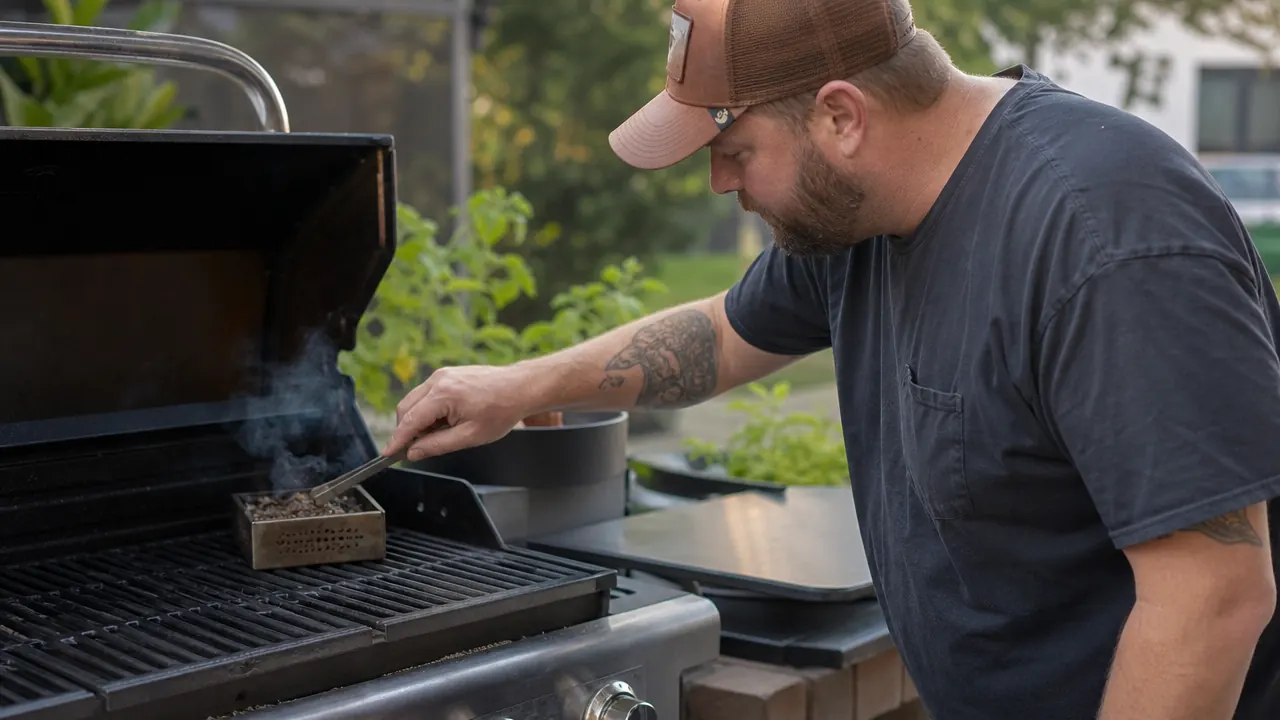
Wood Chip Pairing and Setup Tips That Apply to Both Boxes
Both boxes work with the same wood chips, and the flavor pairing logic is identical regardless of which one you choose. Apple and cherry chips produce a mild, sweet smoke that complements chicken, pork chops, salmon, and even vegetables. Hickory gives you the deep, slightly bitter backbone that most people associate with classic Southern BBQ, and it is the right call for ribs, pork shoulder, and brisket. Mesquite burns hot and intense and is better suited to short, high-heat cooks like steaks and burgers where the cook time is under 20 minutes. Go too long with mesquite and the smoke turns acrid. Whatever wood you use, soak your chips in water for 30 minutes before loading. The Weber's extra capacity means you can pack it with wet chips and still get a full, even smoke output without the chips burning off before the moisture has a chance to work through them.
Placement is the other variable that makes or breaks smoker box results. Put the box directly over one of the lit burners, ideally toward the back of the grill where heat is most consistent. With the Weber, the cleanest setup is to light the burner directly under the box plus one adjacent burner, set those to medium-high to get the chips going, then drop the heat under the food side to low and cook your protein over indirect heat on the opposite side. This gives you a genuine low-and-slow smoke environment on a gas grill without buying anything else. The Weber's stable, universal footprint makes this placement reliable across grill sizes. With the Char-Broil box on a non-Char-Broil grill, you sometimes have to fiddle with the positioning to get it to sit flat, which adds a small but annoying step at the start of every cook.
Who Should Buy Which
Buy the Weber if you cook regularly on weekends and want a smoker box that works well the first time you use it and keeps working two summers from now without asking you to maintain it. If you are feeding a family, hosting cookouts, or doing longer cooks like whole chickens, racks of ribs, or pork loin, the Weber's larger capacity, faster startup, and hinged lid design are worth every dollar of the price gap over the Char-Broil. The Weber is also the right call if you own any grill that is not a Char-Broil brand grill, since the universal fit removes any guesswork about compatibility. At 4.6 stars across nearly 3,900 reviews, it has a track record broad enough to trust.
Consider the Char-Broil if you are on a genuinely tight budget and mostly doing shorter cooks, burgers, steaks, and chicken pieces in the 15 to 25 minute range, where the smoke duration gap matters much less. It will still add real smoke flavor at a lower entry price, and if you own a Char-Broil grill and are comfortable with basic cast iron maintenance, it will hold up reasonably well. Just go in knowing you will need to re-season it periodically, you will likely reload chips at least once on anything longer than 30 minutes, and the two-piece lid will require more patience than the Weber's hinged version. For occasional or casual use, those tradeoffs may be perfectly acceptable. For a cook who wants to make smoke flavor a regular part of their weekend routine, the Weber is the one worth investing in.
One last thing worth saying: no smoker box, regardless of brand, produces the same depth of smoke as a dedicated offset smoker or a pellet grill running for four hours. A smoker box is a tool for adding a real, noticeable smoke note to gas-grilled food. It works. It works well when you use it right. But managing your expectations is part of using it successfully. The Weber gets you closer to that dedicated-smoker result than the Char-Broil does, especially on longer cooks, but neither is going to produce competition-level brisket on a 3-burner gas grill. They are excellent additions to a backyard cook's toolkit, not replacements for a serious smoker setup. With that said, the smoke flavor the Weber produces on a rack of ribs is real enough that your neighbors will notice. That is worth something.
Stop settling for food that tastes like a gas grill. The Weber fixes that.
If you made it this far, you already know which box wins the comparison. The Weber Premium Smoker Box has the capacity, the build quality, and the design to give your gas grill real BBQ smoke flavor, cook after cook. Check today's price and see if it is in stock.
Amazon Check Today's Price on Amazon →