
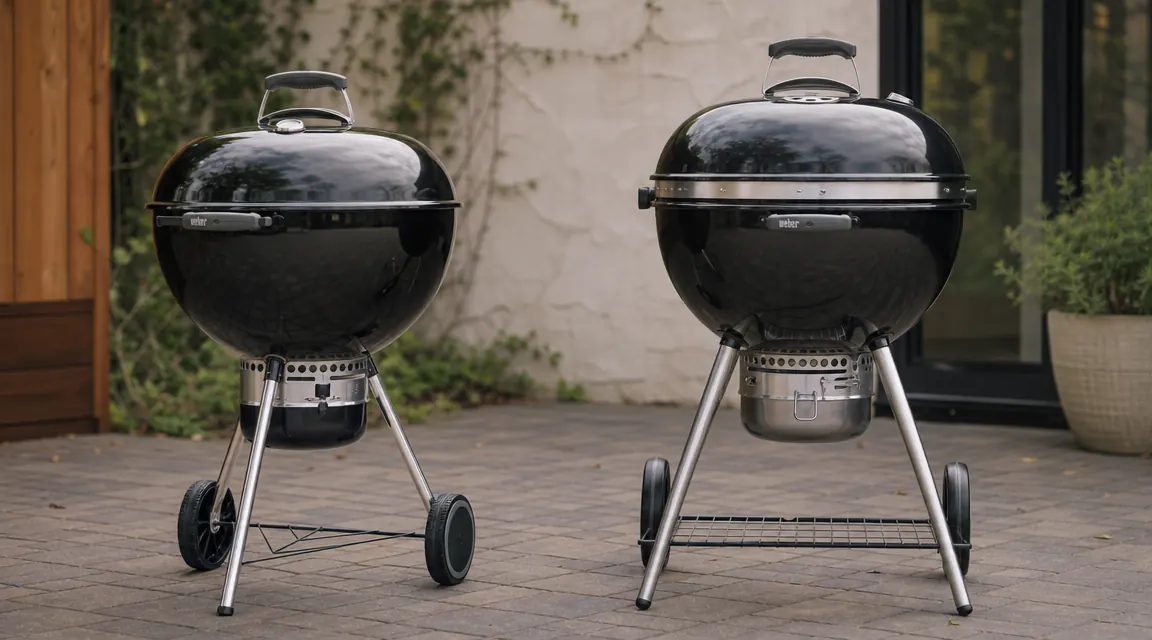
You are standing in a big-box store or scrolling Amazon late on a Wednesday night. Two kettle grills are in front of you. One is the Weber Original Kettle 22-inch, which has been around since 1952 and has more than 10,000 reviews on Amazon with a 4.8-star average. The other is the Napoleon Rodeo Charcoal Kettle, which looks almost identical in the photos, sits at a higher price, and carries some respectable marketing language about build quality. You want to know which one is actually worth the space in your backyard and the money out of your wallet. I have cooked on both through a full grilling season, and the short answer is this: the Weber wins for most home grillers, and it is not especially close.
That does not mean the Napoleon is bad. It has real strengths, and there is a specific type of buyer who should consider it. But if you are a weekend backyard cook who wants a charcoal grill that will hold consistent temperature, clean up without drama, and still be working properly in five years, the Weber Original Kettle is the cleaner call. Here is what actually separates them.
| Weber Original Kettle 22" | Napoleon Rodeo Charcoal Kettle | |
|---|---|---|
| Price (current) | Lower price | Higher price |
| Cooking Area | 363 sq in | 363 sq in |
| Lid Material | Porcelain-enameled steel | Porcelain-enameled steel |
| Ash Cleanup System | One-Touch cleaning system with removable ash catcher | Basic ash pan, no sweep mechanism |
| Bottom Vent Control | Single adjustable vent with sweep handle | Adjustable vent, stiffer action |
| Charcoal Grate | Hinged on both sides for adding coals mid-cook | Solid grate, no hinged access |
| Legs | Three aluminum legs, lightweight and rustproof | Three steel legs |
| Warranty | 10-year warranty on bowl, lid, and One-Touch system | Lid and bowl only, shorter coverage |
| Weight | 32 lbs | 36 lbs |
If your charcoal grill costs more than your grocery run, you deserve 10 years of manufacturer backing.
The Weber Original Kettle 22-inch comes with a 10-year warranty on the bowl, lid, and One-Touch cleaning system. Over 10,000 backyard cooks have rated it 4.8 stars on Amazon. Check today's price before your next Saturday cookout.
Amazon Check Today's Price on Amazon →Where the Weber Wins: Four Things That Matter More Than the Spec Sheet
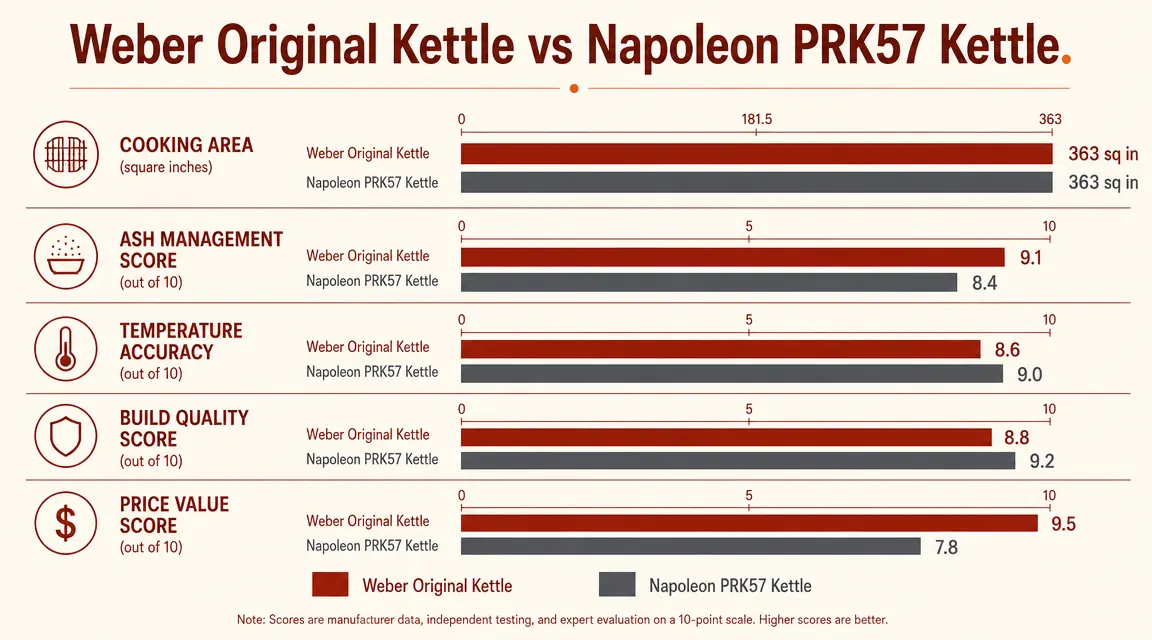
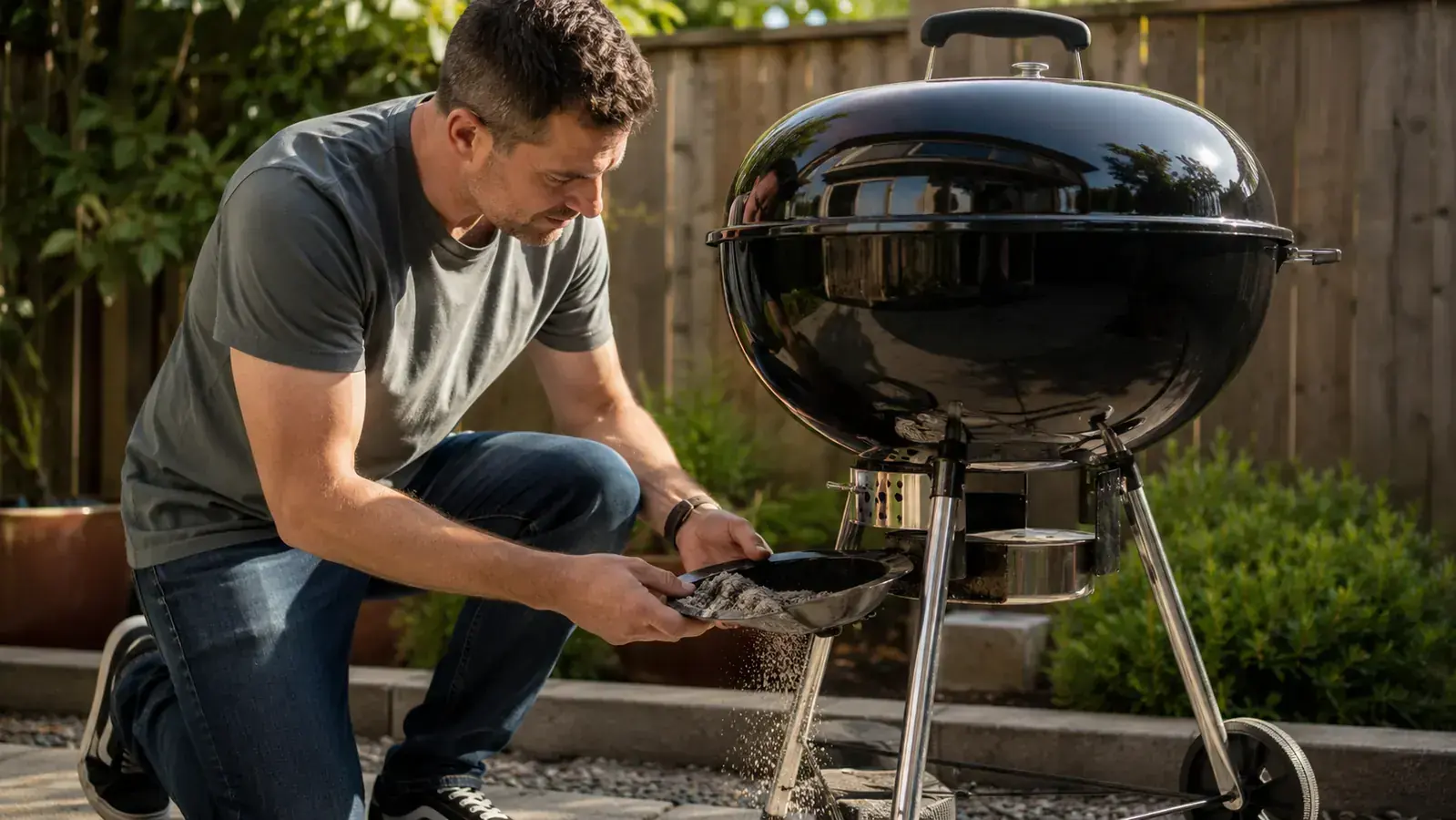
The One-Touch cleaning system is the single most underrated feature on any charcoal grill in this price range. Three steel blades sweep the ash down into a removable aluminum catcher with one turn of the bottom handle. You do not crouch down and knock ash into a bag with a wire brush. You do not wait for everything to cool before touching the bottom. You sweep, you pull the catcher, you dump it. The whole process takes about 45 seconds. I have owned grills without this system and I cannot tell you how much faster cleanup changes your willingness to actually use the thing on a weeknight. On the Napoleon, ash management means waiting, then fishing out a basic pan from the bottom. It works, but it adds friction at the exact moment you want to go inside and eat.
The hinged cooking grate is the second thing most buyers miss in the spec comparison. On the Weber, both sides of the cooking grate lift independently so you can drop additional charcoal directly onto the fire without moving your food. That matters a lot on long cooks: ribs at two hours, a pork shoulder at four. On the Napoleon, the grate is solid, which means you are picking it up and setting it aside, moving hot food, and generally creating the kind of chaos that leads to a dropped chicken thigh. Small design choice, real practical difference.
Third: the warranty. Weber backs the bowl, lid, and One-Touch cleaning system for 10 years. That covers the parts that actually crack, rust, or break with heavy seasonal use. Napoleon's warranty coverage on the Rodeo is more limited and shorter. For a grill you are planning to cook on every summer for the next decade, that difference in coverage is not trivial.
Fourth: the price gap. At a notably lower price than the Napoleon, the Weber is not a budget compromise. It is the same cooking area, the same porcelain enamel lid and bowl, and a demonstrably better ash management system. You are paying more for the Napoleon without getting more where it counts for most cooks.
Where the Napoleon Wins: Two Legitimate Strengths
The Napoleon Rodeo Charcoal Kettle does have two things worth acknowledging honestly. The first is build feel. When you pick it up in a store, the Napoleon feels heavier and slightly more substantial than the Weber. The steel legs have a wider gauge. Some buyers who want that planted, dense feel will prefer it. This is real, even if it does not translate to better cooking performance or a longer lifespan in practice.
The second strength is the lid handle. Napoleon uses a cast metal handle that stays noticeably cooler during long cooks at sustained high temperatures. The Weber plastic handle works perfectly well and has never been a safety issue in my experience, but if you frequently grab the lid without a glove to check your cook, the Napoleon handle stays more comfortable. It is a specific, honest win. Just not a premium-tier win.
The Weber does not feel cheap. It feels like a tool that knows exactly what it is supposed to do and does not waste your money on anything else.
More cooking area would not help you if cleanup makes you avoid the grill.
The Weber One-Touch ash system removes the friction that keeps most backyard cooks inside. Check what the Weber Original Kettle 22-inch costs right now on Amazon.
Amazon Check Today's Price on Amazon →Temperature Control: How They Actually Perform on a Saturday Cook
Both grills use the same fundamental kettle design: domed lid, one vent on top, one vent on the bottom, round cooking grate. The airflow physics are identical. Temperature control on a kettle grill comes down almost entirely to how well the vents work and how smoothly you can adjust them in real time while you are also managing food, smoke, and hungry family members standing two feet away.
The Weber bottom vent uses a sweep handle that moves smoothly across all positions from fully open to nearly closed. I can go from fully open to quarter-open with one light push of my thumb. That responsiveness matters when you are trying to hold a steady 250 degrees for a long indirect cook. The Napoleon vent works the same way in theory, but after a full season of use mine developed a stiffer action that required more deliberate effort to adjust accurately. This may vary unit to unit. But it was consistent enough that temperature management on the Napoleon required slightly more hands-on attention than the Weber asked for.
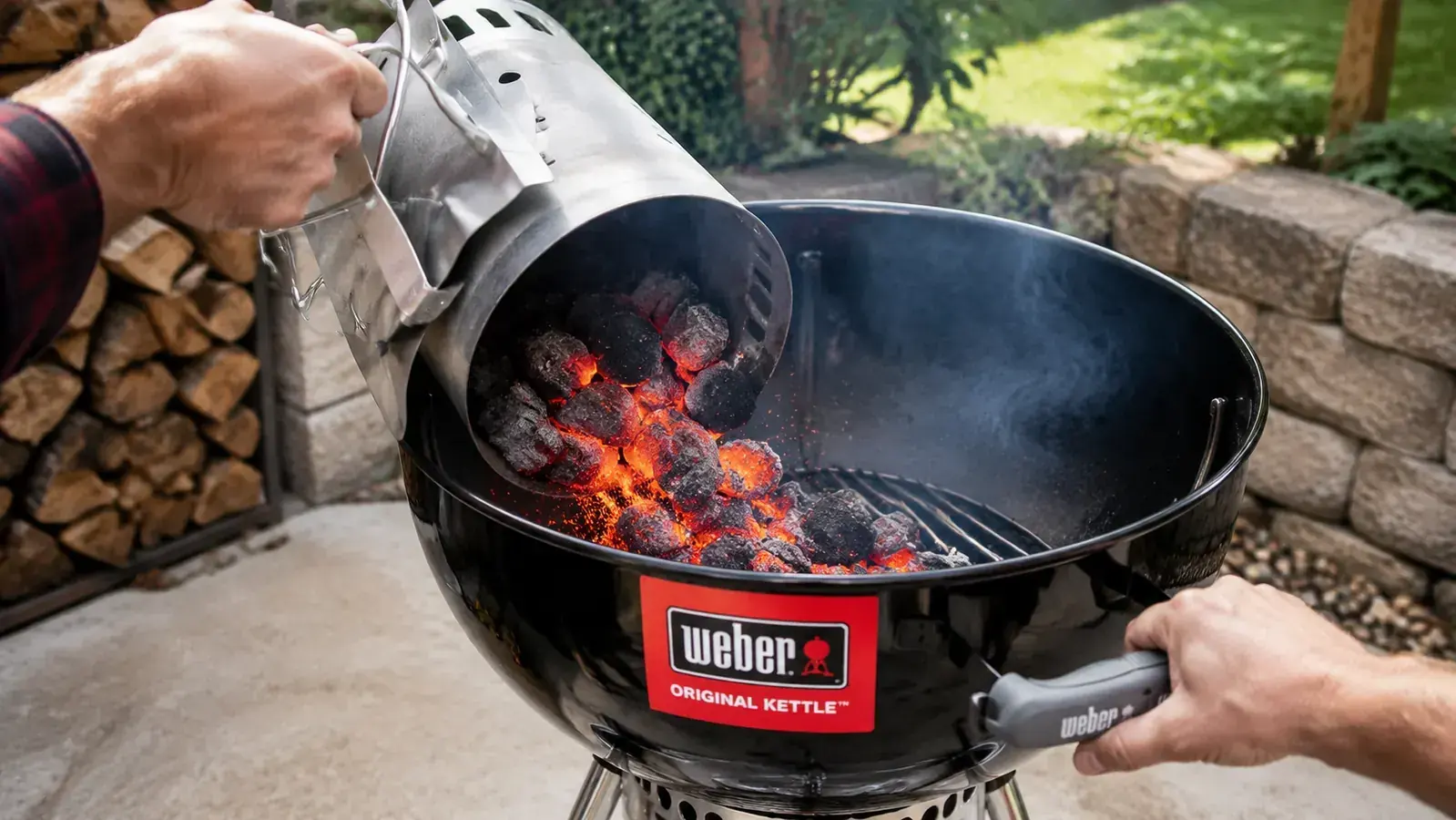
For two-zone cooking, which is the technique I rely on for almost every cook whether I am doing burgers or bone-in chicken thighs, both grills perform well. The principle is the same on each: coals on one side, food on the other, lid on, vent above the food side. If you want to understand exactly how to set up a two-zone fire on either of these kettles, we have a full guide on how to set up two-zone heat on a charcoal grill that walks through the process step by step. The Weber's hinged grate does make it easier to shift coals and fine-tune your hot and cool zones mid-cook without lifting your entire cooking surface.
Assembly and First Use
The Weber goes together in about 20 minutes with nothing more than a single bolt and the included hardware. The instructions are clear and there are no parts left over at the end, which is not always a given in this category. The Napoleon assembly is similar in complexity and time. Neither grill will frustrate you on the first day. Where they differ slightly is in how the ash catcher attaches: the Weber catcher clips onto a hook and hangs cleanly out of the way. The Napoleon's ash pan slides in from the bottom and requires a small amount of patience to seat properly. Neither is difficult, but the Weber's solution feels more considered.
Long-Term Build Quality: What Holds Up and What Does Not
After two full grilling seasons, the Weber's porcelain enamel lid and bowl show no cracking, no rust, and no peeling. The One-Touch mechanism sweeps as cleanly as it did out of the box. The legs have some surface scuff from moving it around the patio, but the aluminum construction means they will never rust regardless of how wet your winters get. The plastic handle is unchanged.
The Weber I cook on has been through two winters stored under a basic grill cover with temperatures down to 18 degrees. No issues of any kind. Weber's 10-year warranty exists because the company has built hundreds of thousands of these over 70 years and knows the design holds. That warranty is not marketing language. It is a reflection of actual manufacturing confidence backed by a long service history.
Weber's long-term track record is also visible in the Amazon review count: more than 10,100 reviews averaging 4.8 stars. That scale of real-world feedback, accumulated across buyers who have owned the grill for varying lengths of time and in varying climates, is a more reliable signal than any single review or head-to-head test. If the grill routinely failed after two seasons, the reviews would reflect it clearly.
Who Should Buy the Weber Original Kettle
The Weber Original Kettle 22-inch is the right choice if you are cooking for a family of four on weekends, getting into charcoal grilling for the first time, or replacing a grill that finally gave out after years of service. It is also the right call if you are an experienced charcoal cook who wants a reliable second grill for direct searing while a smoker handles low-and-slow work in the background. The combination of the One-Touch cleanup system, the hinged charcoal grate, the 10-year warranty, and the lower entry price covers the practical needs of the overwhelming majority of backyard cooks. If you want more depth on how this grill performs across a full two years of weekend cooks, our full Weber kettle grill review goes into seasonal performance, lid seal, and long-term grate wear in more detail.
Who Should Consider the Napoleon Instead
If you consistently cook without gloves and regularly grab the lid bare-handed to check your food, the Napoleon's cooler-running cast metal handle is a genuine comfort improvement. If you also strongly prefer the denser, heavier build feel and plan to keep the grill stationary in a fixed outdoor kitchen setup where you never need to move it, the Napoleon is a defensible choice. You will pay more, give up the One-Touch ash system, and deal with a solid charcoal grate that will occasionally frustrate you on longer cooks when you need to add fuel. But if handle comfort and build heft are the deciding factors for your specific situation, the Napoleon delivers on exactly those two things.
The Bottom Line
The Weber Original Kettle 22-inch is the better kettle grill for most backyard cooks. It is less expensive, cleans up faster with the One-Touch system, gives you hinged charcoal access for long cooks, and carries a 10-year warranty that the Napoleon does not match on comparable components. The Napoleon has a better lid handle and a heavier feel that a specific subset of buyers will prefer, but those advantages do not justify the price premium for most weekend grillers. Buy the Weber, use it every weekend, and put the money you saved toward a quality chimney starter and a bag of hardwood lump charcoal for your first cook.
10,100 reviewers gave it 4.8 stars. Your next Saturday cookout is waiting.
The Weber Original Kettle 22-inch is the kettle grill most backyard cooks will be happiest with long-term. Check today's price on Amazon and see what is in stock.
Amazon Check Today's Price on Amazon →